A nineteenth‑century alien invasion novel has become a sharper manual for modern fear than many contemporary techno‑thrillers. H. G. Wells’s The War of the Worlds, written in an era of steam and telegraph, seems to reverse‑engineer the emotional logic of pandemics, drones, and information warfare long before those terms existed.
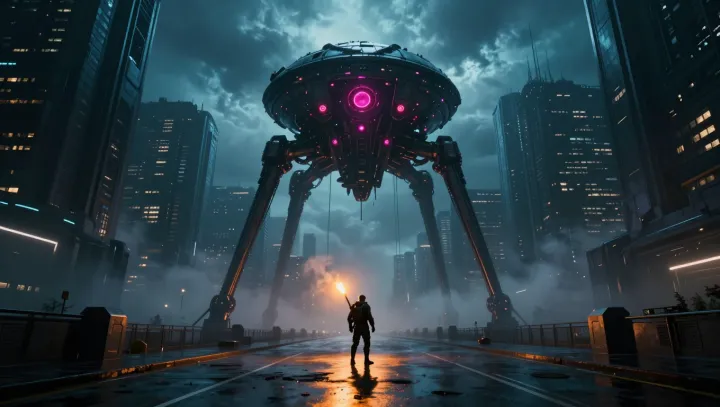
Wells imagined a world where invisible agents move faster than armies. The Martian “black smoke” behaves like an airborne pathogen, spreading through respiratory exposure and exploiting basic immunology: those without prior antibodies die in clusters, while survival depends on biological chance, not heroism. In that same universe, the iconic tripod machines operate as remote‑killing platforms, a narrative ancestor of unmanned aerial vehicles. Their distance between operator and target prefigures today’s ethical debates about rules of engagement and psychological detachment in remote warfare.
Information itself becomes a combatant in the novel. Telegraph failures, fragmented rumors, and delayed newspapers create a live experiment in entropy, as useful signal decays into panic‑inducing noise. Wells effectively models a primitive disinformation ecosystem, where the marginal effect of each unreliable report is amplified by fear and limited verification. Many recent thrillers lean on gadget catalogues and brand names, yet miss this systems view of vulnerability: bodies overwhelmed by contagion, cities surveilled and struck from above, publics destabilized by broken communication networks. The story reads less like prophecy than an x‑ray of recurring human fragility.