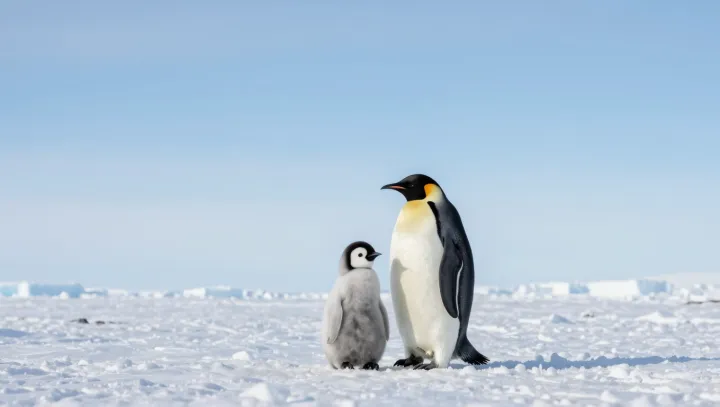
Antarctic seas were relatively warm when penguins began evolving the toolkit that now lets them dominate the deep freeze. Fossils and genomic studies indicate that traits for life in bitter cold emerged long before the continent became buried in ice, turning early penguins into pre-adapted specialists once temperatures plunged.
Researchers trace a stepwise redesign of the penguin body plan. Dense, overlapping feathers increased insulation and trapped air, while a thickened fat layer created an efficient thermal barrier. Genes linked to hemoglobin tweaked oxygen transport, supporting prolonged dives in frigid water. Shifts in basal metabolic rate boosted internal heat production yet were balanced by countercurrent heat exchangers in flippers and feet, limiting energy loss. Together, these changes hardened the birds against cold oceans even under relatively mild skies.
Vision and foraging systems also moved ahead of the climate curve. Modifications in opsin genes tuned eyes to the blue light that penetrates dim, icy water, and stiffer, flipper-like wings improved underwater propulsion. As Antarctica cooled and ice sheets expanded, these pre-existing adaptations turned into a powerful ecological advantage, allowing penguins to occupy niches that other seabirds abandoned and to convert a cooling crisis into an evolutionary stronghold.