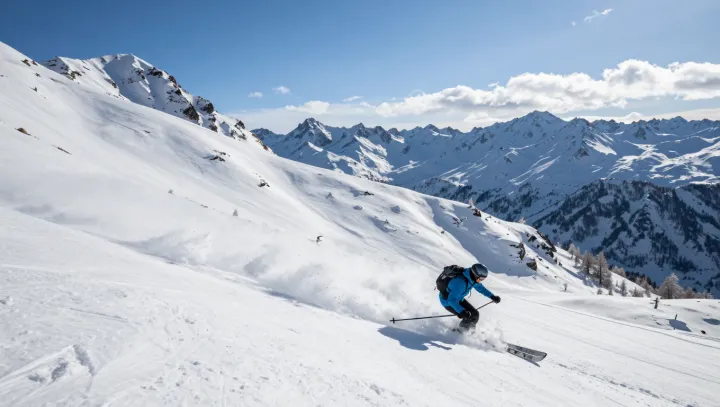
Endless daylight over Greenland’s ice cap quietly rewrites the rules of ski season. When the sun stops setting, expert skiers move their attention north, trading crowded resorts for remote glacier basins that stay lit around the clock.
The timing is a calculated response to physics and mountain safety rather than romance. Earlier in the season, polar storms, unstable snowpacks and low-angle light make crevasse fields harder to read. Later, sustained solar radiation and higher air temperatures drive a more predictable melt-freeze cycle, consolidating the snowpack and improving glide on the glaciers. The midnight sun provides continuous visibility, extending what guides call the decision-making window: route finding, crevasse detection and avalanche assessment no longer race a sunset cutoff.
Glaciology also shapes the calendar. Winter accumulation loads the ice with fresh snow, but only after weeks of gradual warming does that snow bridge open crevasses more reliably without collapsing under a skier’s weight. With no darkness, teams can schedule long ascents during the coldest hours, when surface crusts are firmest, and then target descents when the upper layers enter a brief phase of ideal corn snow. This ability to align effort with micro-variations in snow temperature and surface albedo, instead of with a clock, is what turns midnight glacier faces into premium terrain.
Logistics follow the same logic. Helicopters, ski planes and boats gain efficiency when pilots and captains are not constrained by night operations, yet can still choose the safest weather windows. Photographers and film crews exploit the low solar angle that lingers for hours, capturing long, soft shadows over untracked slopes without the rush of a single sunset. For the small community of expert skiers willing to travel this far, that short Arctic window offers something rare in modern skiing: vast, visible, and largely untouched lines, accessible at almost any hour.