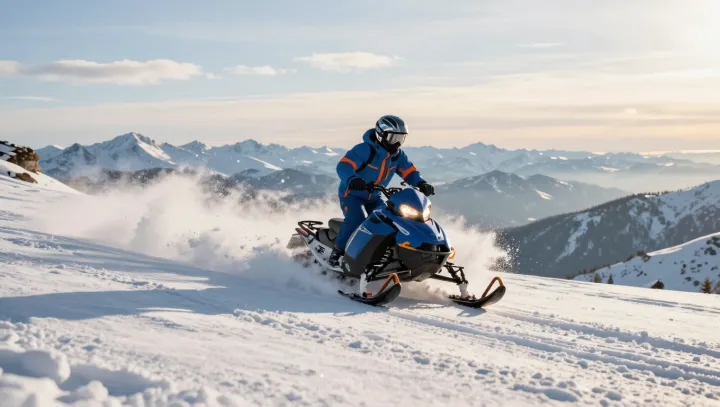
Snow Bully’s track does not fight deep snow; it avoids concentrating force. Its wide, low-pressure belt spreads the same total weight over a much larger contact area, dropping ground pressure below the snow’s bearing capacity. Where a human foot compresses a small patch past its limit, the machine simply never crosses that threshold.
The physics is basic normal stress and contact area, but the effect feels counterintuitive. Ground pressure equals weight divided by area; increase the footprint and the pressure falls, even if total weight stays constant. Snow has a finite shear strength and compressive strength. Once local stress exceeds those values, the structure collapses and you sink. By flattening its load across a long, continuous track, Snow Bully keeps the normal stress within the snow’s elastic range for most grains under the belt.
Friction coefficient and snow compaction then do the rest. As the track rolls, it gently pre-compacts a shallow layer, increasing density and internal friction without punching through to weaker layers below. Lugs grip through shear rather than digging vertical holes. A person with the same nominal weight per square inch cannot maintain that broad, stable contact: boots flex, steps are impulsive, and each stride spikes local stress, so the snow fails and the body sinks while the vehicle glides on a self-made platform.