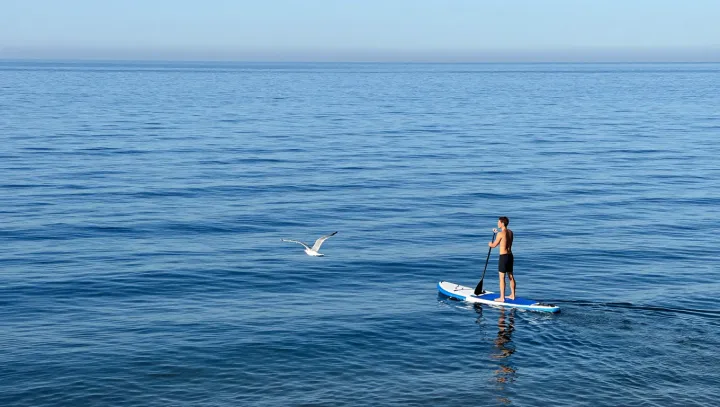
Spray, noise and speed hit the body at once, but the real action is inside the skull. High-speed water sports feel addictive because they drive a coordinated surge in the brain’s reward circuitry, not because waves carry some hidden enchantment.
As the board or craft accelerates, the vestibular system tracks angular velocity and linear acceleration, feeding data into motor cortex and cerebellum. Every micro-adjustment of balance becomes a live calibration problem. When the body maintains equilibrium at the edge of instability, the brain treats that as a successful prediction error correction, and reward pathways fire. Dopamine release in the mesolimbic circuit reinforces the behavior, while the sympathetic nervous system raises heart rate and blood pressure, sharpening attention.
Controlled risk is the other key variable. Threat-detection networks in the amygdala and prefrontal cortex run a constant cost–benefit analysis that resembles a real-time marginal utility calculation. The risk is high enough to activate stress hormones like adrenaline, but usually constrained by equipment, skill and environment. This narrow band between safety and danger produces an optimal arousal zone that resembles the flow state described in performance psychology. Speed, balance and risk therefore act as adjustable inputs to a single reward loop, which is why the same water, at low speed and low stakes, rarely produces the same compulsive pull.