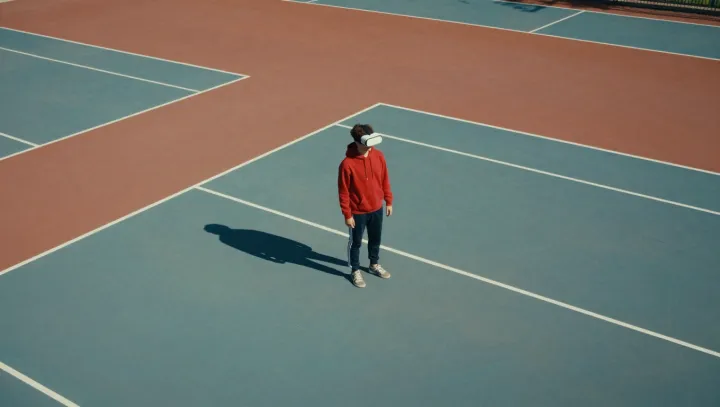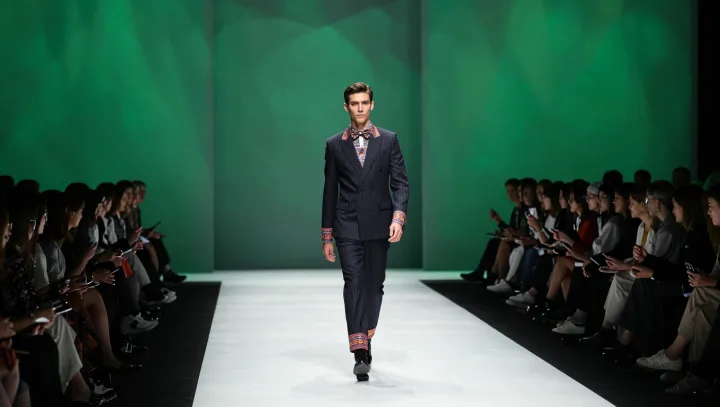
Monochrome tailoring and clean lines dominate the most talked-about menswear shows, even as maximalist styling floods social media. The apparent paradox sits inside the way the visual cortex and memory systems handle information. When an outfit restricts its palette and strips the silhouette to a few clear shapes, it reduces what cognitive scientists call cognitive load, leaving the brain with less to decode and more bandwidth to store a single, coherent image.
Hyper-layered looks, with clashing prints, unusual cuts and dense accessories, increase visual entropy. The eye keeps scanning for hierarchy but finds no obvious focal point, so attention fragments. Minimal outfits do the opposite: one dominant color family, one proportion story, one graphic gesture. This sharpens figure-ground segregation in the primary visual cortex and boosts pattern recognition in higher-order areas, which improves encoding in long-term memory and strengthens recall.
There is also a marginal effect at work for designers. Each added color or detail yields less incremental impact once the viewer’s perceptual channels are saturated. By contrast, editing down acts like a filter, amplifying contrast between the look and its surroundings on the runway. The result is not just a cleaner photograph but a stronger neural snapshot, which is why the simplest menswear often becomes the reference image audiences carry home.