Cold numbers, not romantic myths, expose Everest as relatively forgiving compared with some lower summits. Its death rate sits in the low single digits, while certain steep snow peaks post fatality ratios that climb into double figures on popular routes.
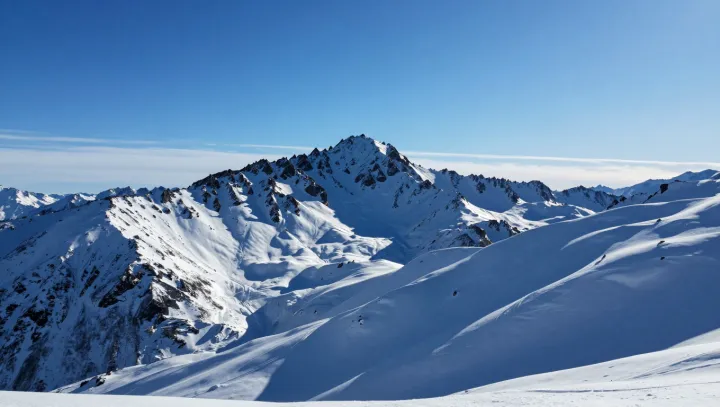
The main difference is geometry, not glory. Shorter killers often have sustained forty to fifty degree faces, broken by seracs and hanging glaciers that load unstable slabs. That profile concentrates risk; one misstep or one slab release sweeps the entire rope team. Everest offers long plodding terrain on fixed lines, with a broad summit ridge that, in stable weather, behaves more like a high, thin hiking trail than a technical wall.
More brutal still is exposure to objective hazard. On many compact peaks, climbers spend a huge fraction of their ascent directly under cornices, couloirs, and avalanche paths. Time under fire, in effect. On Everest, once past the Khumbu Icefall, much of the route follows comparatively sheltered ribs, where hazard is more about hypoxia and pulmonary edema than instant burial or fall.
Logistics tilt the odds further. Lower, sharper peaks often attract small, self supported teams with minimal fixed protection, limited acclimatization rotations, and no commercial guide infrastructure. That strips away redundancy. By contrast, Everest hosts large expeditions, stocked camps, saturated radio traffic, and helicopter support near its flanks, so a single error or storm does not automatically end as a body recovery.
What looks modest on a map can, in the tight confines of a narrow couloir, feel like a vertical courtroom where every step is a verdict on risk taken earlier in the climb.