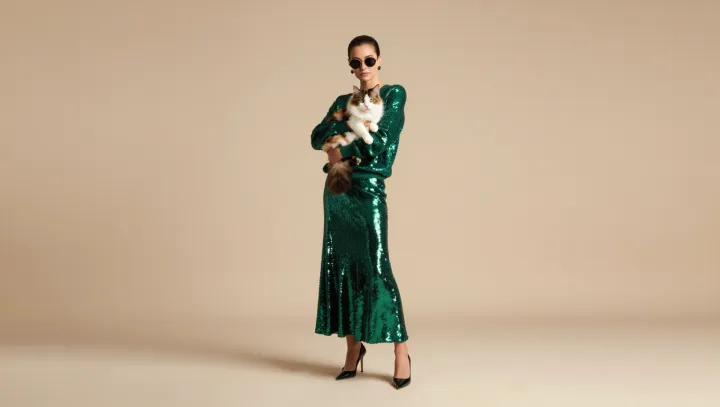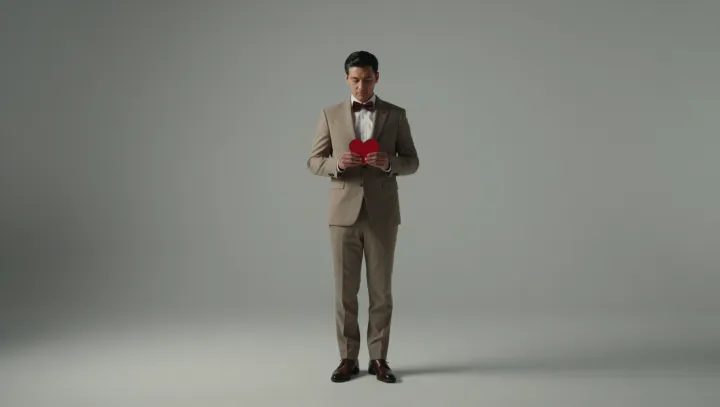
Color, not charisma, does most of the early talking. In controlled style experiments, simply swapping a black suit for khaki and adding a small red accent sharply boosts ratings of warmth and trust, even when the face, pose, and lighting stay identical.
The harsh truth is that black loads the visual field with high luminance contrast and low hue information, which observers unconsciously read as distance, authority, even threat, while khaki shifts the signal toward mid-value, low-saturation tones that mimic skin and earth and are processed by the ventral visual stream as less risky, more approachable input. That softer contrast profile reduces perceived dominance and allows facial micro-expressions to carry more weight in the observer’s social cognition, which in turn lifts scores on trust and cooperativeness in standard impression-formation protocols.
Red, applied as a small accent, behaves like a targeting laser. A tie knot, a pocket square edge, a watch detail. Through opponent-process theory and selective attention, that pinpoint red directs gaze to the center of the torso–face axis, exaggerating eye contact and chest openness without changing posture at all. At low area coverage, red reads not as aggression but as vascular vitality and arousal, cues that social neuroscience links to perceived sincerity and engagement via activation in the amygdala and medial prefrontal cortex. The outfit has not changed category. The nervous system has changed interpretation.