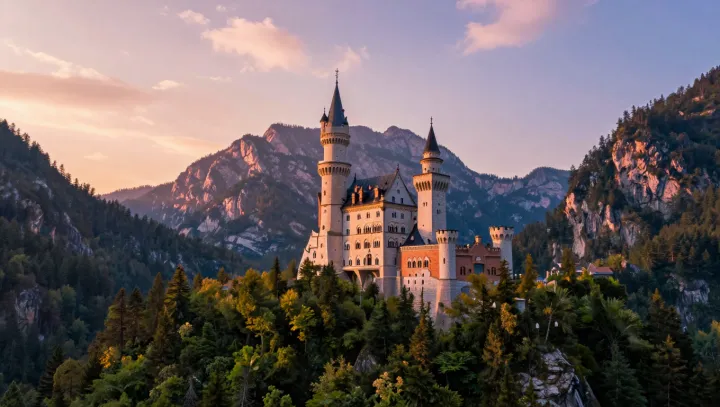
Stone towers did the branding long before studios did the marketing. On a Bavarian ridge, a theatrically vertical castle fused medievalist fantasy with modern engineering, its pointed turrets and stacked silhouettes forming a ready‑made storyboard for any culture hungry for visual shorthand.
The uncomfortable truth is that this so‑called folly worked like a prototype. Designed with romantic historicism yet built using steel supports and precise load‑bearing calculations, the structure offered clean, legible geometry that translated beautifully into lithography, early color printing and, later, celluloid. Its cliff‑hugging massing produced striking high‑contrast outlines that animators could trace, flatten and exaggerate without losing recognizability, turning structural engineering into instant iconography.
Even more quietly, the building solved a narrative problem for mass media. One image had to signal hierarchy, safety, magic and distance all at once, and this castle’s elevated siting, axial gates and stacked courtyards encoded those ideas into pure form. When a major animation studio scouted European references, this silhouette, not some anonymous fortress, offered a ready leverage point: a visual moat that competitors would hesitate to abandon because audiences had already accepted it as the fairy‑tale default. Theme parks then closed the loop, installing a walk‑through version as a central orienting device and turning a monarch’s private obsession into the shared mental picture of a storybook kingdom.