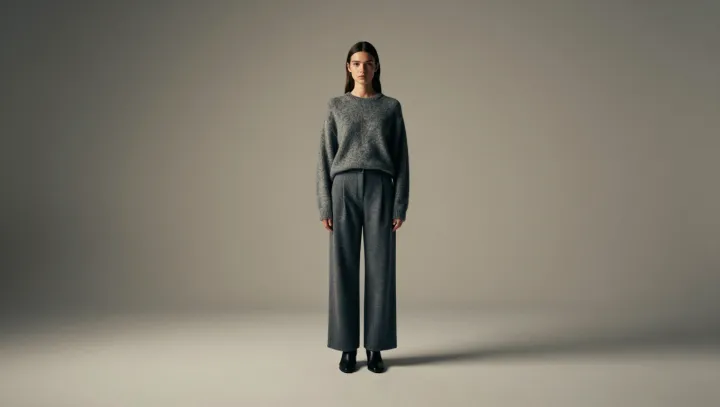
A flat sheet of grey fabric should feel anonymous; in a knit set, it often reads like money. The brain is not seeing color first. It is running a rapid scan of silhouette, surface, and context, then filing the look under either “control” or “compliance.” Luxury wins when control dominates that split second verdict.
The sharp claim is this: one color feels rich when it looks chosen, not assigned. Clean, uninterrupted grey lets the cut become the story; a precise shoulder line and calibrated ease at the waist act like design patents for the body, suggesting access to tailoring and fit trials instead of bulk ordering. Monochrome also compresses visual noise, so the eye tracks vertical lines and proportion, a trick long used in runway styling to stretch the figure and imply calm authority.
Texture then does the quiet heavy lifting. A fine-gauge knit with high stitch density, long-staple yarn and a dry, matte hand signals fiber quality and production cost; pilling, shine or limp ribs scream budget uniform. When top and bottom match perfectly in shade and knit structure, the set reads as a coordinated system rather than two random separates, hinting at design intention and surplus time to curate, not scramble.
Context seals the message. Paired with soft leather flats, a structured bag and unhurried body language, the same grey knit set slips into the visual code of “off-duty but in control,” the aesthetic often linked with private-club lobbies and quiet offices. Strip away logos, keep the color mute, and what remains is an aura of effort saved, not effort skipped.