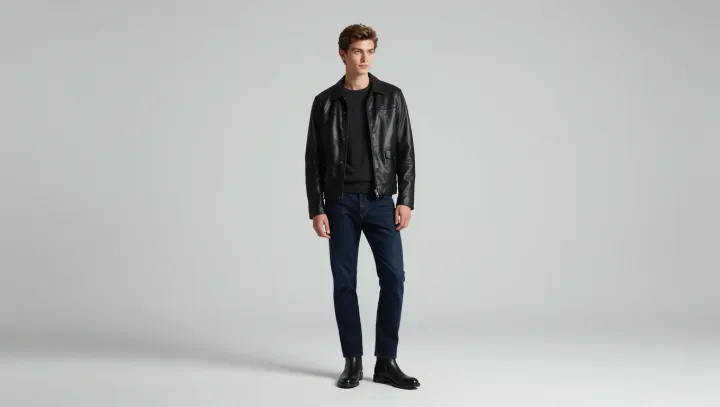
A leather jacket rarely fails because of the leather. It fails because the body inside it is fighting the pattern, the hem, the balance. Watch where the jacket ends and the legs begin: a hem that cuts across the widest part of the hips shortens the frame, while one that hits just above that line shifts visual weight upward and lengthens the stance.
The sharpest outfits start with this quiet geometry. Tailors call it balance and they obsess over front length, back length and the way seams track over the shoulder girdle. When the shoulder line matches your clavicles and the armholes sit close to the torso, the jacket stops looking like armor and starts reading like part of your skeleton, so the rest of the outfit can stay almost brutally simple.
Texture does the next round of work. Smooth calf against raw denim, matte knit against a slightly oily grain, suede against a crisp poplin shirt: these contrasts create depth without adding color or logos. Get the textures wrong and the jacket looks like costume. Get them right and even a basic black biker turns into background infrastructure for the face, the hands, the way you move.
The paradox is clear: the more invisible the decisions on fit, proportion and texture, the more visible the man wearing the leather jacket becomes.