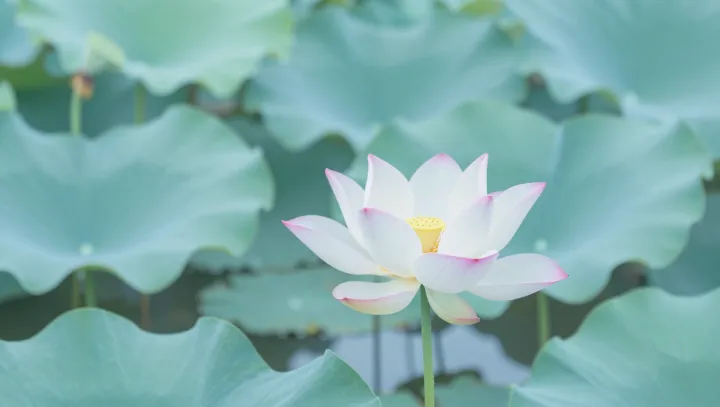
From mud, not from mountain snow, rises the flower that Chinese poets trusted most with the work of ethics. Thick sediment, still warm water, exposed stems; the setting is almost deliberately unheroic, yet out of it emerges a blossom that appears clean, centered, and self-contained, a visual argument for inner clarity amid social contamination.
Central to this preference is a moral wager: purity that never meets dirt looks fragile, so classical poets stage the lotus inside impurity and let it stay unsoiled. Botanical fact helps the metaphor; waxy cuticles repel water, rhizomes anchor in anaerobic sludge, and the plant surfaces intact, which reads as an embodied treatise on integrity under pressure rather than withdrawal from the world. The still, heated pond functions as a psychological diagram of court life or factional intrigue, where motionless surfaces hide decay, yet the flower stands upright and visibly detached from both bank and shore.
Equally pointed is the lotus habit of presenting itself in full view. Long stalk, no dense foliage, nothing to hide behind; poets interpret this as a style of transparent conduct, the opposite of shaded, tangled growth associated with cunning. When later moralists praise the lotus as loving the mud yet refusing its stain, they are not praising innocence. They are endorsing a harder discipline, in which transcendence is proven only when the water is warm, the air heavy, and the mud inescapable.