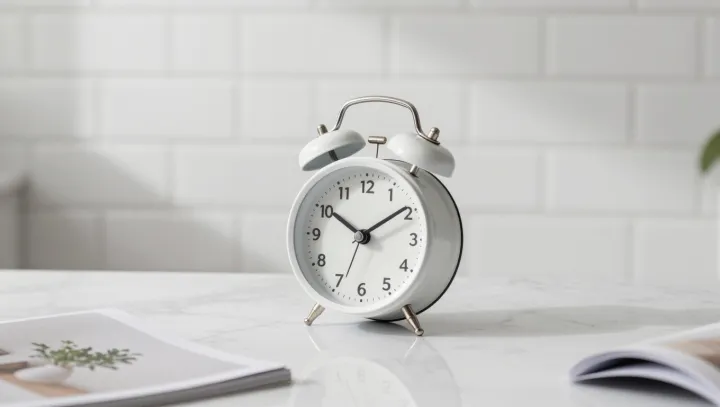
A ten dollar analog alarm clock is a better sleep coach than your phone. That sounds like nostalgia; it is neurobiology and incentive design. Backlit screens suppress melatonin secretion, distort circadian rhythm, and push sleep onset later, while many productivity apps are engineered to maximize session length and notification cycles, not rest. One device wants your attention; the other does not even know you exist.
The harsher claim is this: simplicity enforces better protocols than features. An analog alarm offers one function, fixed in time, which acts as a daily zeitgeber, a cue that anchors the suprachiasmatic nucleus far more consistently than variable app alerts. No infinite scroll. No late message preview. Once the alarm is set, the physical dial becomes a commitment device: to sleep, to wake, to stop renegotiating with your future self at midnight.
Households benefit even more. Shared analog clocks create a visible schedule artifact in kitchens and bedrooms, aligning wake windows and meal times without requiring every family member to sync settings, permissions, and software updates. The clock rings; people move. No passwords, no dark patterns, no competing badges or streaks. Just a small plastic metronome, keeping time for bodies that were never designed to run on push notifications.