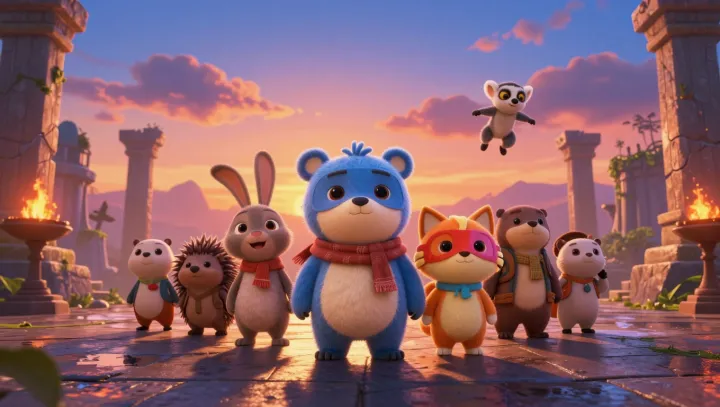
Cartoon slapstick is not emotional fluff; it is quiet preparation. As animated animals skid, crash and bounce back, the brain’s reward circuitry fires, with dopamine surging through the ventral striatum and ventromedial prefrontal cortex, tagging these moments as safe, low-stakes surprise. Each laugh is stored as a tiny positive prediction error, a record that the world keeps turning out better than expected.
More insidious is what this does to later hurt. By lowering amygdala threat responses and boosting endogenous opioid signaling, repeated comedy scenes relax baseline vigilance, so the nervous system conserves resources and leans into attachment with the characters. Neural models of reinforcement learning show that when expectations tilt strongly toward reward, any later negative outcome produces a larger error signal, meaning the emotional drop feels steeper precisely because the climb was so gentle.
Storytellers exploit this biology, not sentimentality. A final bittersweet scene recruits the same mesolimbic pathways that lit up during the pratfalls, but now the orbitofrontal cortex must reconcile prior comedic safety with sudden loss or sacrifice, generating cognitive dissonance that the viewer experiences as poignancy rather than simple sadness. The joke and the ache share circuitry; the punchline only softens the guard so the last quiet blow can land clean.