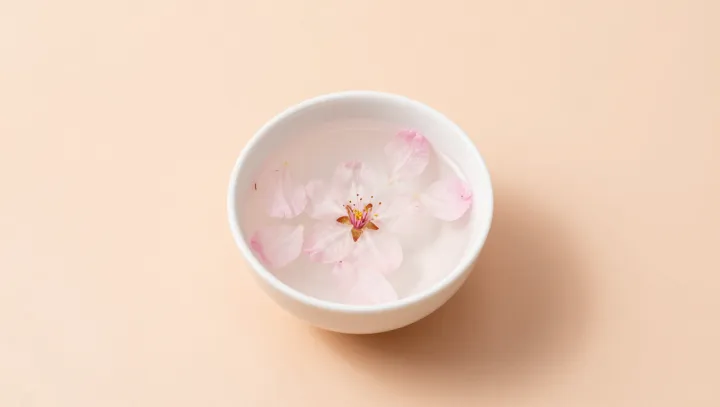
A bowl of near-white cherry blossoms wins the refreshment contest before any citrus slice even tries. Not by drama. By demanding less work from your brain’s visual circuits, those petals buy you a quiet kind of clarity.
Color noise, not brightness, is the real tax collector here. High-saturation citrus floods photoreceptors across long-, medium-, and short-wavelength cones, which then push heavy traffic through opponent-process channels and into the primary visual cortex, forcing more edge detection, color contrast computation, and figure-ground segregation. Low-chroma blossoms, with a tight spectral band and gentle luminance gradients, trigger fewer spikes, lower synaptic activity, and a smaller patch of cortical recruitment. The scene looks simple, so the brain can idle lower.
Calm, in this case, is just reduced metabolic expenditure wearing a poetic mask. Functional imaging shows that high-contrast, polychromatic arrays light up larger swaths of the visual cortex and parietal areas, raising both oxygen consumption and glucose use, while minimalist, low-contrast fields keep activation more localized and sparse. The cherry bowl functions like a visual low-pass filter, stripping away high-frequency color transitions that would otherwise keep neurons firing in dense bursts. Bright citrus, with its jagged edges and competing hues, acts more like a sensory notification feed, constantly pinging attentional networks that never quite get to stand down.