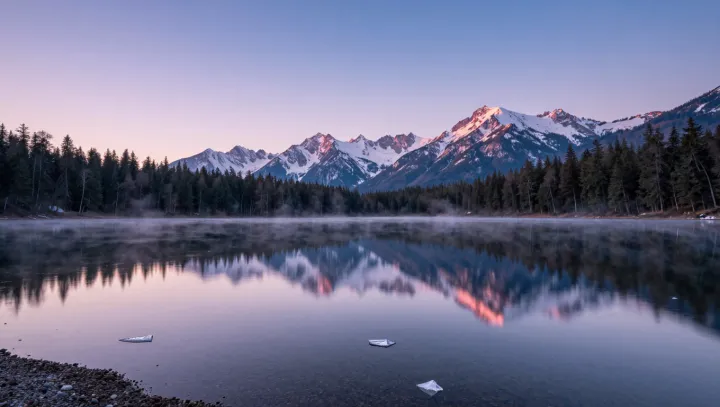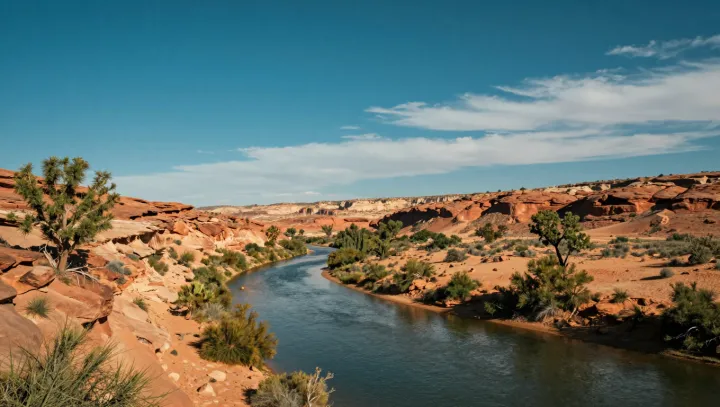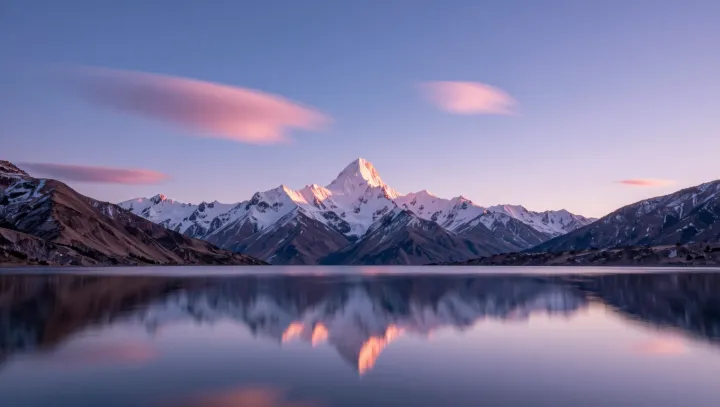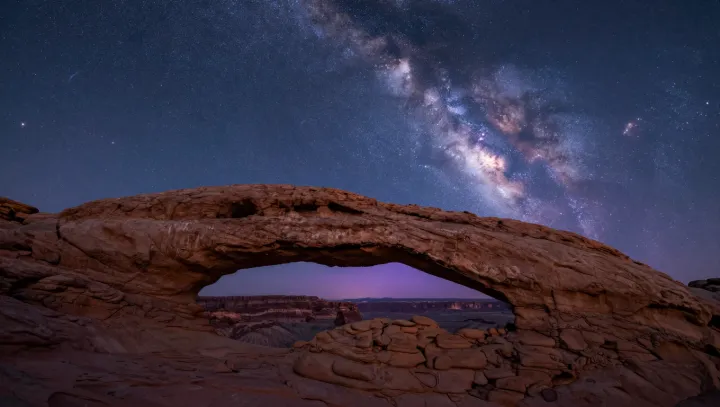
The sky is not fair. Above two desert parks under the same Milky Way, one vault glows with dense starfields while the other looks oddly bare, a difference written not in space but in stone, air chemistry, and human light leaking over the horizon.
The harsh truth is that rock decides more than romance. Pale sandstone and salt flats have high albedo, so ground light bounces back into the lower troposphere, where Rayleigh and Mie scattering smear each lumen into a gray veil. Dark basalt and varnished cliffs absorb that same flux, cut back secondary glow, and preserve contrast between starlight and skyglow, even when the measured illuminance from nearby towns is similar on paper.
Equally underestimated is how the desert air edits the signal. Dry, clean air with low aerosol optical depth transmits point sources almost intact, so the Milky Way’s dust lanes pop as high spatial frequency detail. Add a thin haze of particulate matter or ozone, and the point spread function of each star fattens; the sky brightness rises by fractions of a magnitude that the casual visitor reads as an empty sky, because contrast, not raw star count, is what the eye reports to the brain.
Most decisive, though, is what humans aim at the dark. A park hemmed in by shielded amber LEDs, strict curfews, and downward-directed fixtures can sit only a short drive from suburbs and still achieve near-pristine Bortle-scale ratings. Another park with a single nearby gas station canopy blasting blue-rich light into the boundary layer can lose the Milky Way’s structure to forward-scattered halos, even if satellite radiance maps classify both regions as equally protected desert.
So the contrast between a star-saturated dome and a star-poor wash is not a mystery of astronomy but of design and geology: the same galactic river flows overhead, yet rock reflectance, atmospheric optics, and human engineering quietly decide which park gets to see it.