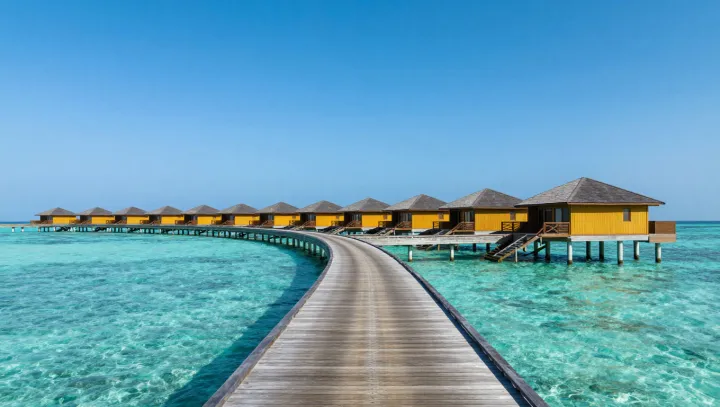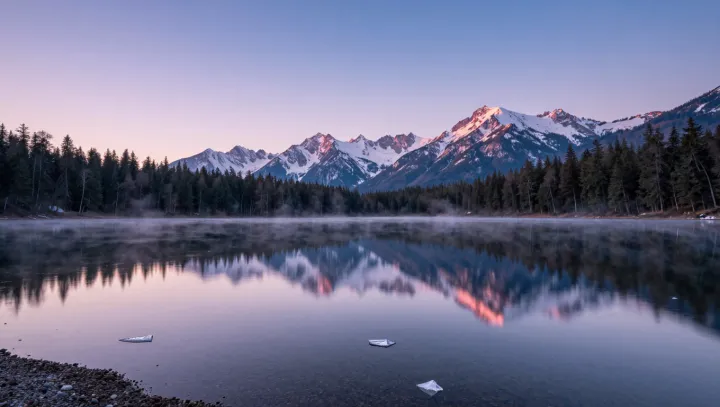
That unreal turquoise is not magic. It is physics running quietly in cold water, driven by glaciers grinding mountains into microscopic debris. As ice moves downslope, its basal shear turns bedrock into rock flour, a fine silicate-rich powder small enough to stay suspended once meltwater delivers it to the basin below.
The striking color, though, comes from what those particles do to light, not from any pigment in the water itself. Each grain, often only micrometers across, acts as a tiny scatterer that favors shorter wavelengths through Mie scattering and enhances selective backscatter in the blue-green range, while longer red wavelengths are absorbed deeper in the water column.
The lake’s hue is therefore a moving signal of glacial activity rather than a static postcard scene. Higher summer melt increases suspended sediment concentration, pushing the water toward opaque milkiness, while calmer inflow lets some particles settle, revealing darker blues as optical depth and scattering coefficients subtly shift with every cloud of rock dust that drifts in from the ice above.