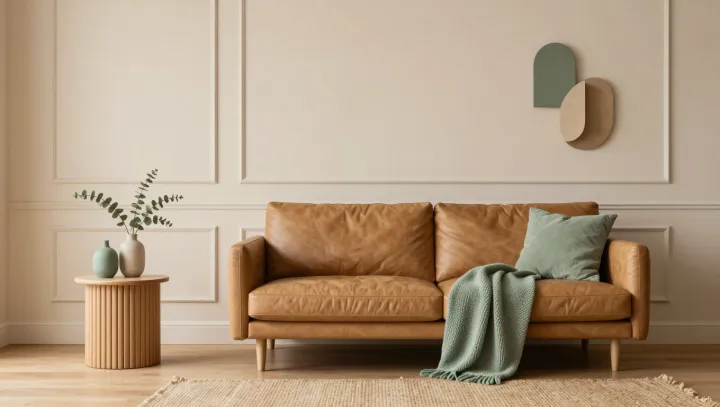
Order does not start with storage boxes. It starts with how a room tells the brain what to do without asking a single question. A decision-light living room reduces micro-choices the way a good interface reduces clicks, leaning on cognitive load theory and habit formation research rather than on decorative containers.
The bold claim is that the calmest rooms are not better organized; they are less mentally demanding. Every extra drawer, basket or multi-purpose unit adds choice architecture the brain must parse, raising working memory demand and decision fatigue. When the sofa, side table and media console each have one obvious landing zone for objects, the prefrontal cortex is spared a constant routing task. You are not deciding where the remote goes; procedural memory is. Low-ambiguity zones act like default settings, so tidying runs on what psychologists describe as automaticity rather than on willpower.
Equally counterintuitive is that some friction is designed out while other friction is deliberately left in. A clear coffee table and an open shelf near the entry cut the physical effort cost of putting items away, exploiting basic energy minimization in human motor behavior. At the same time, designers strip out redundant surfaces, so there is nowhere comfortable for clutter to loiter. The result is a closed-loop behavior system: objects travel along one short, repeatable path from use to rest. What looks like serene minimalism is, in effect, a highly efficient behavioral script hiding in plain sight.