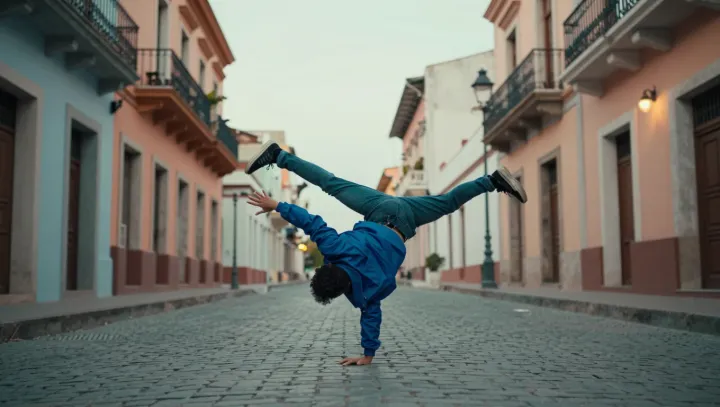
Sound hits first. Before a foot moves, neural circuits are already guessing where the beat will land and how joints must swing through space to catch it. Elite street dancers do not wait for rhythm; they front‑run it, treating each bar as a moving target for internal physics models wired into motor cortex.
The blunt truth is that high‑level freestyle is less about creativity than about prediction accuracy. Through thousands of repetitions under loud, irregular tracks, dancers tune cortico‑striatal loops and the basal ganglia to anticipate micro‑timing shifts, turning error signals into tighter phase locking between auditory cortex and muscle activation. Short drills, like snapping into freezes on randomly cut music, force the cerebellum to refine forward models of limb trajectories while the vestibular system keeps orientation stable during spins.
Equally sharp is their visual forecasting. Top performers treat their own body like a projectile, running near‑instant simulations of arcs and rotations. That process, rooted in the dorsal visual stream and proprioceptive feedback, lets them commit to off‑axis leans and air moves that would floor an untrained body. One useful analogy is a game engine computing collision detection, but here the engine is sensorimotor integration and synaptic plasticity, updating movement plans every few milliseconds as new rhythmic cues and balance data stream in.