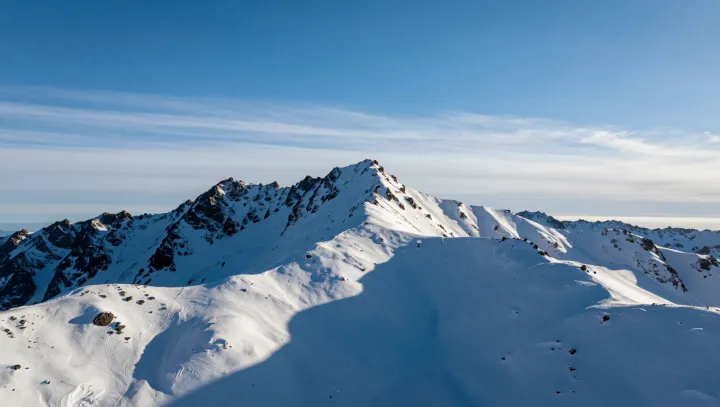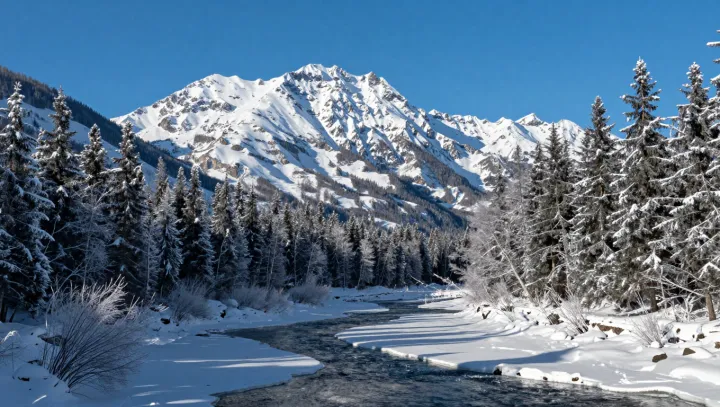
Thin air, not heroic rock, does most of the work here. At roughly four thousand meters, atmospheric pressure drops enough to lower the boiling point of water and speed radiative heat loss, so sunlit slopes warm fast while shaded faces bleed energy straight into space, setting up fierce temperature gradients across a single ridge.
Those gradients are ruthless sculptors. Rock expands in short, bright bursts and then contracts as night temperatures plunge, driving thermal stress weathering that pries open joints and feeds a conveyor belt of debris downslope. Inside that rubble, microscopic ice crystals grow and shrink in pore spaces through repeated freeze–thaw cycles, a textbook case of frost wedging that steadily shatters even the hardest crystalline bedrock.
More subtle, and more decisive, is what the ice refuses to do. Instead of melting and trickling away, surface snow and rime often bypass liquid form through sublimation, jumping straight from solid to vapor in the thin, dry air. That direct phase change strips mass from cornices and ridgelines, sharpens arêtes, and leaves oversteepened cirque walls towering above glassy, frozen valleys that read less like scenery and more like an open-air physics manual.