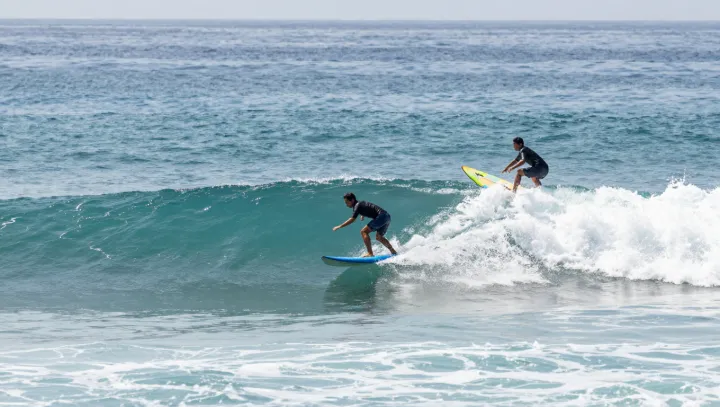
Wave geometry, not gym work, decides who owns the longest line on a heavy reef. Elite bodyboarders know that a few degrees of swell angle can flip a closeout into a running barrel, so they watch approach, period, and refraction like traders watch spreads and volatility. On a shallow ledge, small changes in bathymetry force wave shoaling and wave focusing to happen faster and more violently, and bodyboarders position themselves where that compression peaks instead of where it merely looks comfortable from the shoulder.
Their advantage starts from a blunt premise: muscle is cheap, information is not. A prone stance lowers the center of mass and cuts aerodynamic drag, but the real edge comes from how they sync that body position with the first moment the lip throws, converting vertical lift into horizontal projection. By reading bottom contours, they predict where the refracted energy will rebound, then time a bottom turn or high-line trim so that their rail sits exactly on the zone of maximum pressure, using hydrodynamic lift the way a glider pilot uses a thermal.
The result is a different map of the same break. Where many surfers fade too deep or race too high and outrun the pocket, bodyboarders split sections, bounce between wedges, and link what looks like separate peaks into a single, continuous run. Every micro-adjustment of weight, every delayed paddle, is a decision about energy transfer rather than style. Double the distance, from the same lump of ocean, is simply the return on that quiet physics obsession.