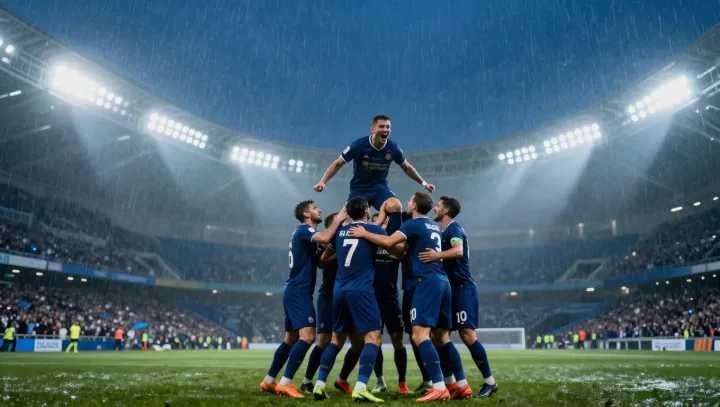
A brief, frantic goal huddle, sports scientists argue, is not decoration but a performance intervention with measurable effects on win probability. High-speed tracking and win-probability models in football and hockey show a spike in synchronized movement and pressing intensity in the two minutes after a tightly clustered celebration, compared with the same teams’ average baseline after more muted reactions.
The counterintuitive claim is that bodies touching for seconds can rival a superstar’s influence because it rewires the group, not the depth chart. Biochemical data from rugby and handball squads link dense, cohesive celebrations with acute rises in oxytocin and reduced cortisol, changes that sharpen reaction time and risk assessment. When that hormonal shift hits ten or more players at once, models of collective efficacy show a nonlinear gain: decision speed improves, passing networks become more centralised, and tactical discipline holds under fatigue in a way no single striker or playmaker can replicate.
Analysts also note that a star is a fixed asset, while a huddle is a repeatable protocol that can be timed to high-leverage moments. Clubs paying for marginal gains increasingly treat celebration choreography like a set piece, rehearsed alongside pressing triggers and rest-defense patterns. On video, the scene looks like joy. In the data, it behaves like a switch.