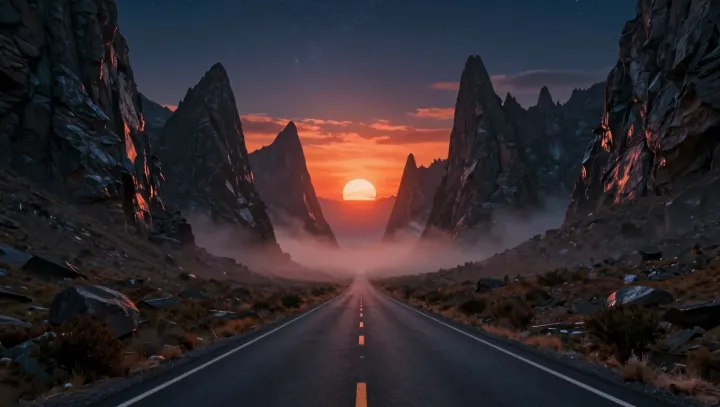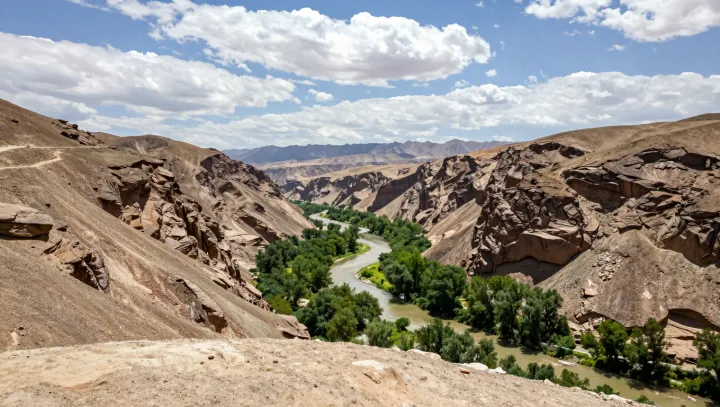
This is not a story about latitude. It is about vertical distance so extreme that midsummer sunbeams never clear the rock. In certain low‑latitude mountain belts, rivers cut canyons more than three kilometers deep, while opposing walls stand only a few hundred meters apart, creating a permanent shadow well.
The counterintuitive point is simple: a place can sit near the tropics and still be darker at noon than many polar towns, if its relief and orientation are aggressive enough. Steep orographic uplift forces rapid fluvial incision; as crust rises and rivers saw downward, the height difference between rim and channel grows faster than valley floors can widen through mass wasting or lateral erosion. Narrow cross‑sections then amplify the effect of solar geometry. Even when the sun climbs high, its path across the sky remains blocked for long stretches by near‑vertical slopes with high sky‑view factors only at the very top.
Atmosphere finishes what rock starts. Moist monsoon air, pushed upslope by orographic lifting, condenses into frequent cloud and haze that already attenuate direct shortwave radiation before it reaches the canyon. Down at the river, multiple reflections off dark, fractured bedrock further weaken any remaining beam. The result is a microclimate where photosynthesis, snowmelt timing and even human circadian rhythms respond less to latitude and more to the geometry of stone.