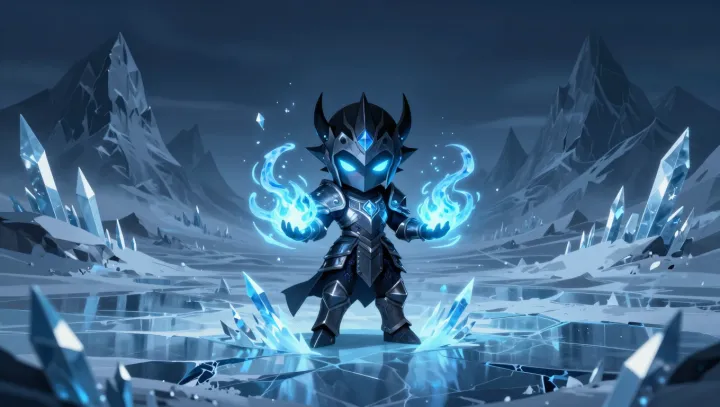
Blue fire is a visual lie that many misread as cold. Against a field of ice, that lie only grows stronger, yet the physics points the other way, tying color to energy levels in gas molecules, to combustion chemistry, and to how hot gases shed light while the frozen ground stays locked below the melting point.
Blue means energy is being spent with focus. Shorter wavelength emission arises when excited molecular fragments and radicals, such as CH and C2, drop between specific quantum energy levels, so the flame glows in the blue band while blackbody radiation from the hot gas remains mostly invisible to the eye. In practical terms, a blue flame usually marks more complete combustion, less soot, and higher local flame temperature than a lazy yellow plume, even when the surrounding air slices at the skin with subfreezing chill.
Ice does not contradict that heat; it cages it. Frozen terrain has high albedo and low thermal conductivity at the surface, so radiant heat is reflected or trapped in thin boundary layers of air while the bulk ice stays rigid. The flame column, driven by exothermic oxidation and buoyant convection, sustains gas temperatures far above the freezing point because chemical reaction rates depend on local activation energy, not on the average temperature of the landscape. In that sense, blue fire on ice is less a paradox than a reminder that color tracks microscopic transitions, not the comfort of anyone watching.