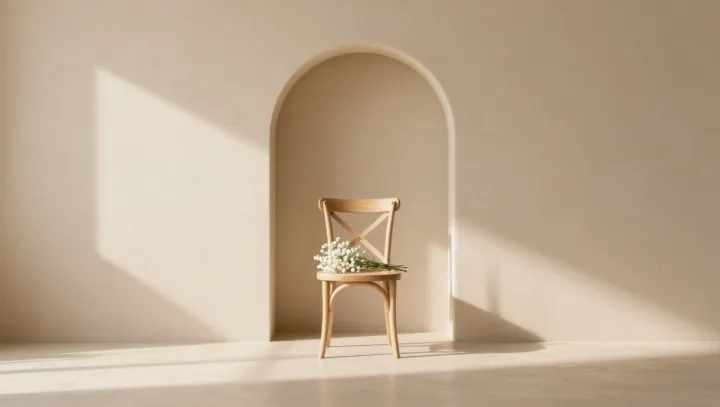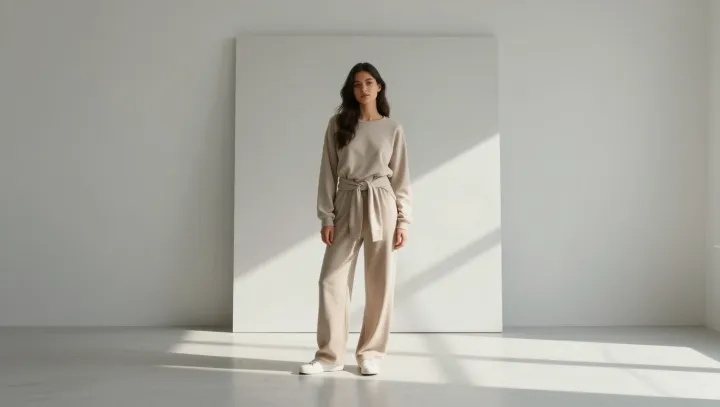
Hard window light is not gentle at all. Under a diagonal beam, beige stops whispering and starts behaving like architecture, because the camera records tonal boundaries far more ruthlessly than your visual system does.
The blunt claim is simple: the light, not the outfit, is doing the styling. Hard diagonal light creates sharp penumbra regions, exaggerated luminance gradients and strong specular highlights, carving folds and seams into bright planes and deep recesses. Human vision runs constant contrast adaptation and local white balance in real time, smoothing these jumps and reinterpreting the outfit as one continuous, muted surface. A sensor, locked to one exposure and one white point, cannot negotiate in the same way, so every ridge, pleat and collar edge becomes a crisp tonal step.
Equally counterintuitive is the way beige turns into a palette of almost black and almost white. Directional light boosts microcontrast through edge enhancement along texture, while the camera’s tone curve compresses midtones and protects highlights, stretching shadows into richer density. Skin, fabric and background, once similar in value, separate into layers because of occlusion shadows and rim light along contours. In person, your brain subtracts the light pattern to recognise materials; on camera, the pattern itself becomes the subject, and the supposedly quiet outfit reads as sculpted, graphic, almost severe.