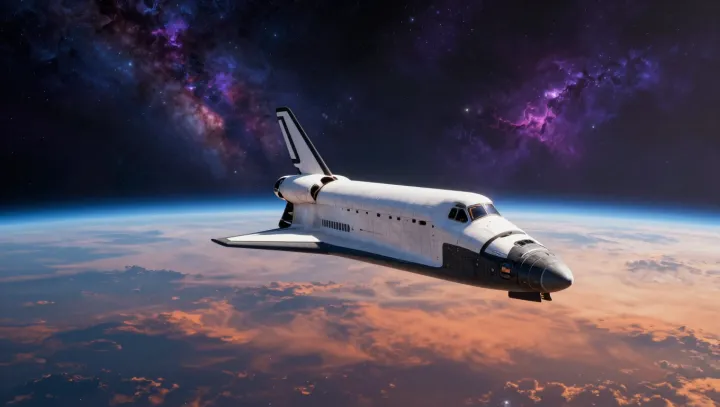
That falling star is not falling anywhere near you. It flares in the mesosphere, typically more than 80 kilometers above ground, where air is thin and motion is hypersonic. Yet a child will reach up, convinced one more step might close the gap.
The mismatch is brutal. Human depth perception evolved for trees, rivers, maybe distant hills, not incandescent grains of rock racing through rarefied gas at many times the speed of sound, and so the brain compresses the sky into a flat dome where near and far blur together. Meteoroids only a few millimeters across slam into atmospheric molecules, kinetic energy converts almost instantly into heat, and the process of ablation strips material from their surface in a bright ionization trail that seems to hang just beyond the clouds. To an unaided eye, there is no parallax cue, no stereo hint, only a streak on black velvet that might as well be a spark just above the rooftop.
The scale is almost rude. A meteor can cross hundreds of kilometers over your head in a heartbeat, blazing higher than commercial aircraft, higher than almost every human machine, yet the entire event fits inside a single eyeful. Astronomers exploit this geometry with triangulation, comparing observations from different sites to pin down altitude and velocity, while casual skywatchers keep insisting the streak landed just behind the nearest hill. Between the fingertip and the mesosphere lies a vertical gulf that the senses will never honestly report.