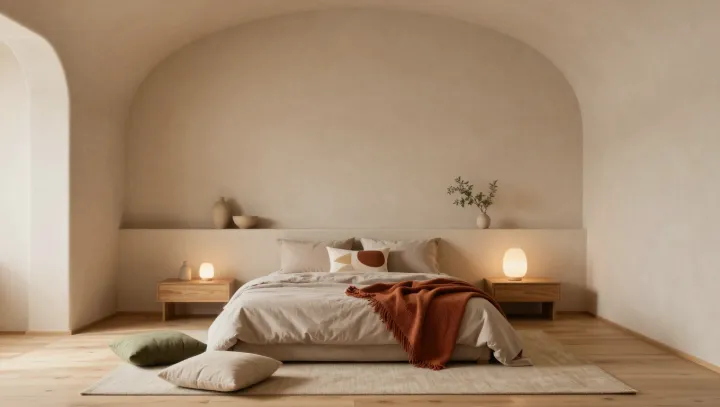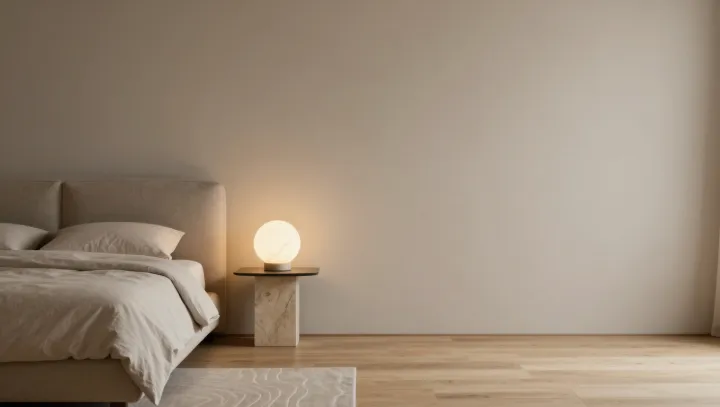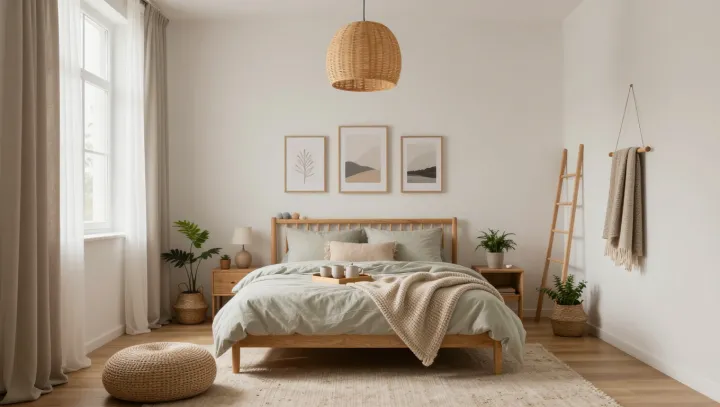
Pale walls can feel warmer than a brick red accent. That is not a paint trick; it is a nervous system effect. Studies on sensory load show that visual clutter and dense color fields raise heart rate and keep the sympathetic nervous system slightly engaged, even when a room looks conventionally cozy, which quietly undermines rest.
The sharper claim is this: space itself is the real blanket. When a bedroom is stripped to light wood, neutral walls, and a handful of textured fabrics, the brain has fewer edges, hues, and objects to track. That reduced visual input lowers cognitive load, easing activity in the prefrontal cortex and amygdala. In that calmer state, the body releases more melatonin, while cortisol drifts down, which people register not as emptiness but as calm warmth.
Texture then does what color is often credited with. A wool throw, a nubby linen duvet, a looped rug give the skin and peripheral vision slow, legible signals. No pattern noise. No hard contrast. Lighting finishes the job: pale surfaces bounce soft, indirect light, raising perceived brightness without increasing lux levels, which stabilizes circadian rhythm rather than jolting it. The result is a room that looks almost bare yet feels, to a tired brain, like the safest place in the house.