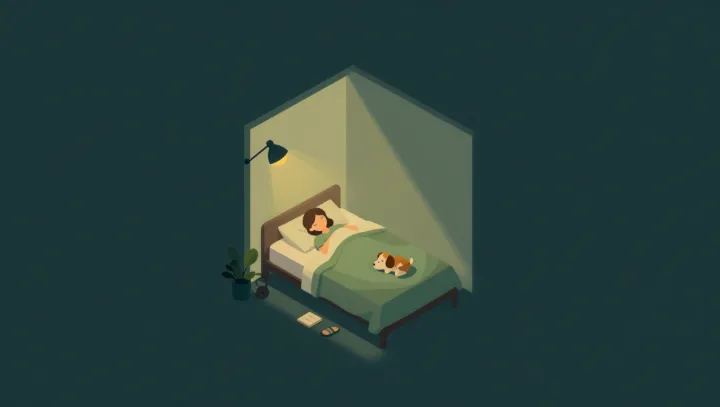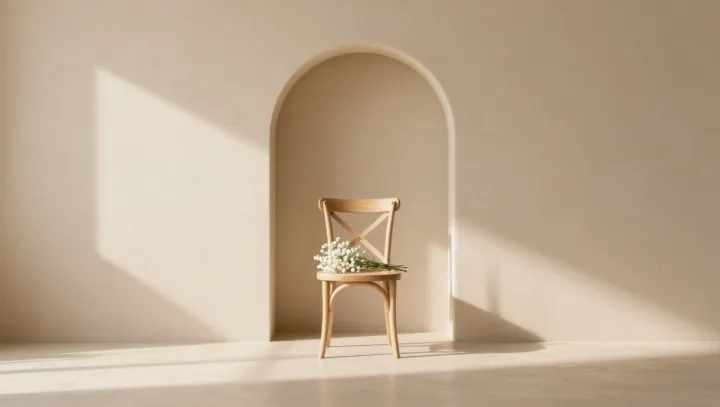
Silence on the walls can be louder than any decor. An almost empty room slashes the number of visual stimuli your brain must process, shrinking the load on visual cortex circuits that constantly perform edge detection, color discrimination, and spatial mapping. Fewer objects mean fewer competing signals for the amygdala to scan as potential threats. What looks like absence is, physiologically, relief.
Calm, here, is not mystery but math. Every object adds more saccades, more micro-adjustments in ocular motor control, more data for working memory to buffer. Strip the space back and you cut that traffic. Then the remaining elements, chosen with intent, take over the emotional work. Warm, low-intensity light supports melatonin regulation and tames arousal in the reticular activating system, so the room feels safe before you even name the feeling.
Arches and natural wood do the rest. Gentle curves echo the brain’s bias for fluent, non-angular forms, which research links to lower activation in threat-related circuits. Organic grain patterns in timber offer low-frequency, fractal-like variation that keeps attention softly engaged without tipping into vigilance. With clutter gone, those few cues dominate the sensory field, giving the mind one simple message to process: you can stand down.