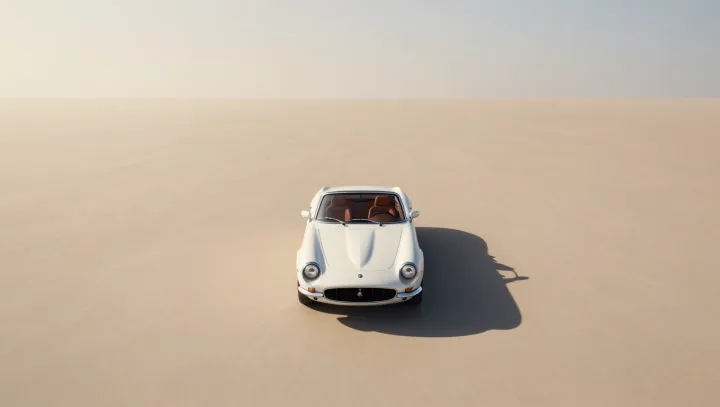
The least realistic angle in car photography might be the most honest one in car design. From above, a convertible stops flirting and starts confessing, because the roofline can no longer hide what the package engineers and clay modelers actually did to make the thing work.
Design chiefs will admit, quietly, that the overhead shot is where proportion lives or dies. Wheelbase against overall length, front overhang against rear, track width against cabin width; seen from eye level, these ratios feel emotional, but from above they become geometry, and geometry is merciless when a platform is stretched too far or an engine bay swallows more than its share.
Vintage convertibles expose this even more. Without a fixed roof, the plan view reveals cowl position, steering column angle, and the hard constraints of crash structure and torsional stiffness, all flattened into a kind of engineering blueprint that the viewer is not supposed to notice but the designer cannot escape during the surfacing phase.
Brand identity also hides there. The way a beltline pinches at the rear axle, the flare of a fender over the wheel arch, the slight asymmetry between dashboard and hood length; these are not styling flourishes but decisions about weight distribution, aerodynamic drag coefficient, and even assembly tooling, written as curves that only fully line up when seen from directly above.