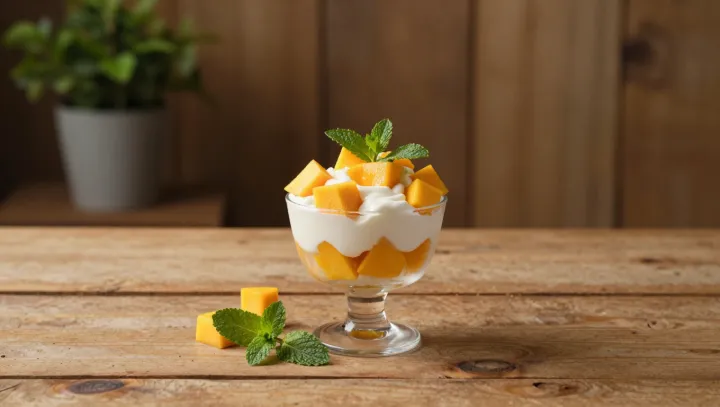
A plain glass of mango cream cheats. Beneath its quick, no‑bake promise sits the same structural thinking that underpins a plated dessert in a luxury pastry kitchen. First comes the base: crushed biscuits or granola form a granular bed with specific particle size distribution, controlling capillary action so melted butter or cream locks the crumbs into a stable, load‑bearing layer.
More engineered than it looks is the cream itself. Whipped dairy or coconut fat is an emulsion, its fat globules stabilized by milk proteins acting as natural surfactants, creating a controlled viscosity profile that prevents the mango purée from sinking or bleeding. When spooned over the crumbs, this semi‑solid behaves like a soft gel, a rheology problem rather than a recipe step, ensuring distinct strata instead of a muddled sludge.
Most deceptive is the fruit layer. Mango purée on top is not just color; it is a calibrated contrast in water activity and acidity that drives gradual flavor diffusion into the cream while leaving a visual boundary. High‑end pâtisserie might hide these gradients inside chocolate shells or molded inserts; the home cook simply stacks them in a tumbler. Same physics, same mass transfer, just stripped of ornament and exposed as a cross‑section you can eat by the spoonful.