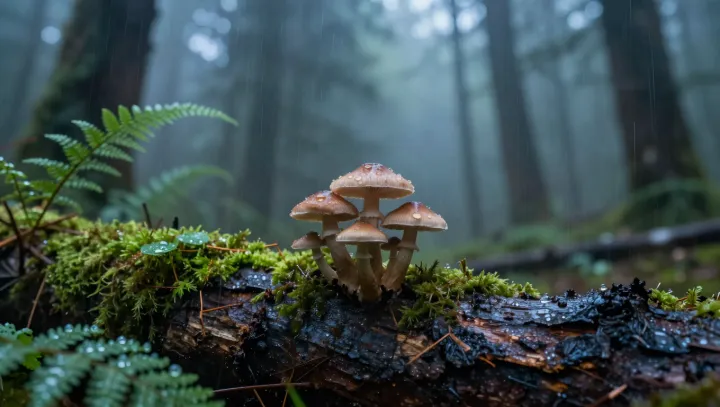
A dead log does not fade; it upgrades. Its cracked surface channels rain into the wood, then capillary action and high porosity lock that water in, so evaporation slows and the interior stays wetter than the surrounding air long after clouds clear.
This soggy core is more than a quirk of texture. The mass of the log gives it thermal inertia, so temperature swings lag behind the open air, creating a buffered microclimate where extremes are blunted and vapor pressure stays low enough to curb rapid drying at the surface.
Decay makes the place even better. As fungi and bacteria break down lignin and cellulose, they increase surface area and create humus-like material that holds water the way a sponge does, while microbial respiration adds gentle heat that stabilizes humidity gradients within the wood.
Moss and fungal fruiting bodies cash in on this physics. Their thin tissues and hyphae depend on constant moisture for gas exchange and spore production, and the log offers shade, persistent condensation and nutrient release, turning dead wood into premium, rent-free rainforest real estate.