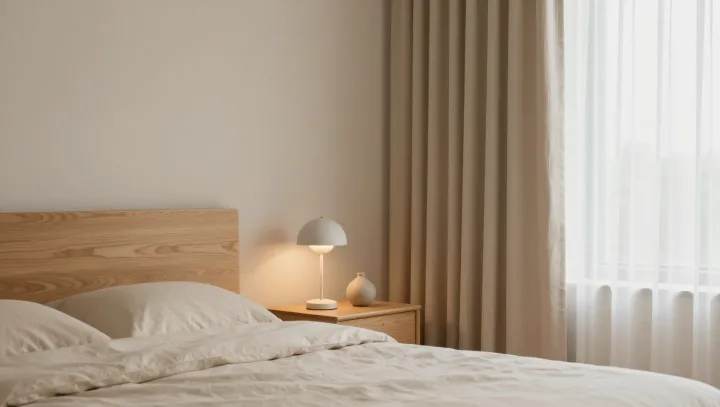
Soft amber light on a nightstand often outperforms an entire new kitchen. That sounds like clickbait, yet the biology is boringly clear. The stress system runs on repetition, not square footage. What your brain trusts is what it sees again and again in the same way.
The bold claim is this: a $30 warm lamp plus two or three stable objects can act as nightly exposure therapy for calm. Under that steady glow, the amygdala and hypothalamus receive the same sensory pattern, at the same point in your circadian rhythm, hundreds of nights in a row. Through synaptic plasticity and classical conditioning, your nervous system tags that scene as “nothing bad happens here,” so cortisol output and heart rate begin to drop almost on cue.
By contrast, a $30,000 renovation is noisy, intermittent, and novelty‑heavy. Impressive, yes, but from a neural perspective it is a one‑time disruption, not a protocol. New countertops do not arrive at identical intensity, color temperature, and timing every night. Without that closed‑loop feedback, the brain cannot build a reliable safety prediction model. What quietly earns trust is the small, predictable ritual: lamp on, familiar objects in place, lights elsewhere dimmed. Same order. Same light. Same message to the threat circuits.
The blunt takeaway is that stress relief behaves less like interior design and more like a lab experiment. Standardize the cue. Reduce variables. Let repetition do the expensive work that marble and custom cabinetry only pretend to buy.