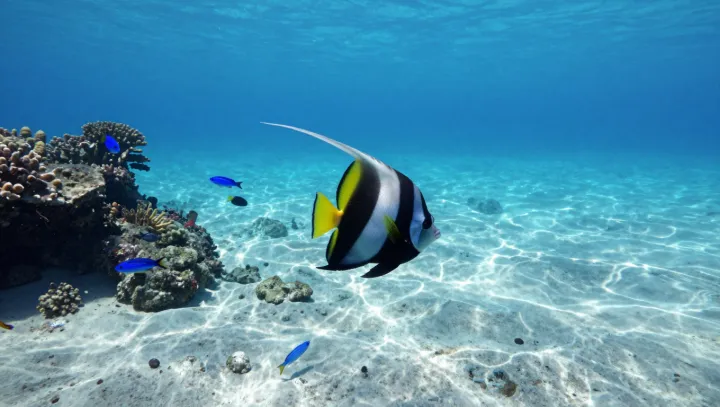
Silence is a trick. Around a coral reef, hydrophones record crackles, grunts, and low rumbles that turn clear water into acoustic clutter, even as a single fish drifts past a camera in apparent emptiness.
That gap between what eyes see and what sensors hear defines reef life. Dense coral architecture, with its branching skeletons and crevices, creates both habitat and echo chamber, scattering sound from snapping shrimp, grazing parrotfish, and drumming damselfish. Many residents are tiny or cryptic: larvae the size of dust motes, planktonic crustaceans, and juveniles wedged into coral polyps. They register on biomass surveys and acoustic monitoring, not on a casual gaze through clear water.
The real crowd is hiding in plain sight. Evolution has rewarded camouflage, countershading, and crepuscular activity, pushing fish to blend with coral, hover motionless, or move at low light when predators rely on lateral line detection and mechanoreception rather than vision. Sound travels efficiently through seawater, so communication, territory defense, and spawning cues rely heavily on acoustic signals that human observers cannot hear unaided. What looks like a quiet, empty blue corridor is, in ecological terms, a packed, noisy neighborhood running at full capacity.