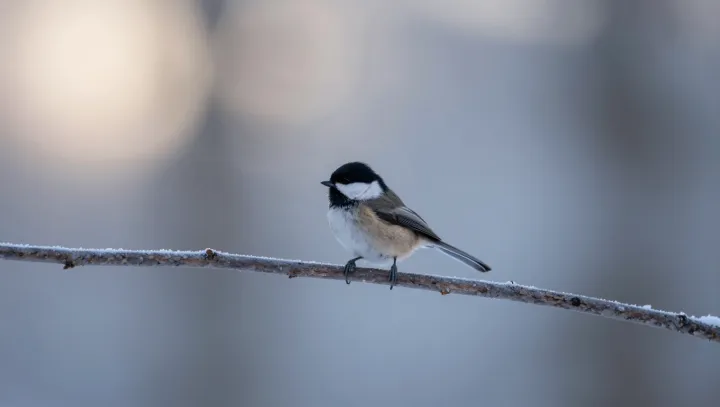
Stillness, not speed, is the chickadee’s main survival tool in winter. A body that small leaks heat fast; every wingbeat is a withdrawal from a tight energy account. By freezing on a twig, the bird slashes muscular activity and slows whole‑body metabolic rate, instead of burning calories in long, acrobatic chases after flying insects.
What looks like idling is actually strategy. While perched, a chickadee fluffs its contour feathers, trapping a thick layer of insulating air and reducing convective heat loss from its surface. Short, darting flights to nearby branches keep foraging costs low in terms of both ATP consumption and oxygen demand, turning the tree itself into a compact buffet rather than a vast aerial hunting ground.
This pause‑and‑pounce rhythm also sharpens search efficiency. Holding still stabilizes the head and eyes, improving visual detection of hidden larvae and dormant eggs tucked into bark crevices. Each motionless scan raises the payoff of the next hop, so the bird maintains a positive daily energy balance. In that frozen pose, it is not hesitating; it is budgeting.