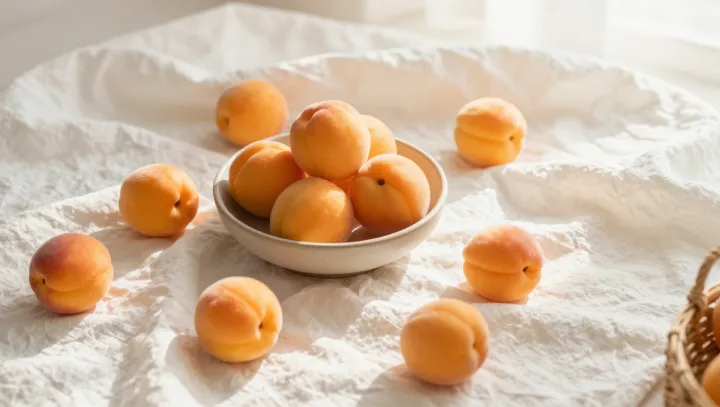
Color in an apricot is not decoration; it is armor. As the fruit shifts from pale gold to red blush, carotenoid pigments accumulate, responding to light intensity and temperature gradients across the skin. Where sunlight hits hardest, cells upregulate biosynthetic enzymes such as phytoene synthase and lycopene beta‑cyclase, thickening this chromatic shield just beneath the cuticle.
What looks like a cosmetic upgrade is really damage control. These carotenoids sit in plastid membranes and absorb excess photons that would otherwise overload chlorophyll and other chromophores, driving photoinhibition and oxidative stress. By dissipating surplus energy as heat through non‑photochemical quenching and intercepting singlet oxygen, they cut the yield of reactive oxygen species that would peroxidize lipids and fragment DNA.
The deeper blush also marks a biochemical trade. As chloroplasts differentiate into chromoplasts, pigment‑rich structures, membrane architecture reorganizes to store carotenoids at high concentration without destabilizing the cell. Those same molecules that tune the fruit’s visual signal to seed dispersers are embedded like molecular light filters, extending the lifetime of proteins, maintaining membrane fluidity, and keeping ripening tissue functionally intact under harsh light.