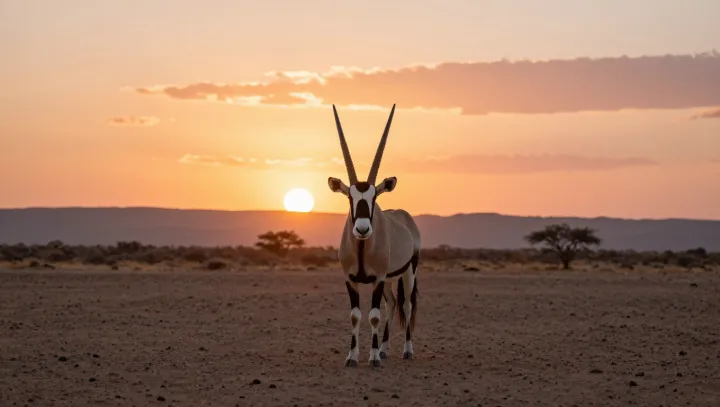
A unicorn, if you strip away the romance, looks suspiciously like a paperwork error in zoology. One animal, probably the Arabian oryx or a close antelope cousin, supplied most of the raw material. Its two long, nearly parallel horns, mounted on a narrow skull, can visually merge into a single spike once distance, heat shimmer and limited depth perception do their quiet work.
The real engine here was not fantasy but optics and trade. Atmospheric refraction and binocular disparity, the same mechanisms that bend a road in summer air or flatten a distant ship, compress those twin horns into one pale spear on the horizon. Hunters, merchants and sailors passed through the antelope’s range, collected horns as trophies or cargo, then carried them into Mediterranean ports where natural history was already a contested field of authority rather than a settled science.
What Europe did next was editorial, not magical. Bestiary compilers, leaning on secondhand travelogues and mistranslated classical texts, folded these horns into existing stories about fierce single-horned beasts. Apothecaries priced them as antidotes. Courts displayed them as proof. Over time, the ordinary antelope stayed put on its desert plains, while its distorted profile walked, quite calmly, into heraldry, saintly visions and the commercial branding of purity.