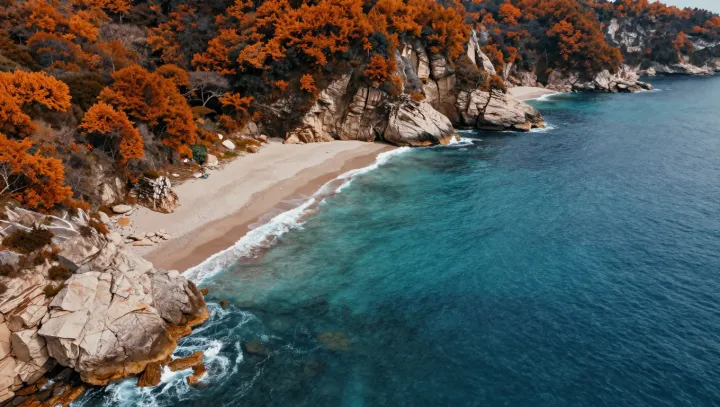
This clarity misleads. Glassy shallows look harmless, yet they sit on top of a long‑range energy conveyor built far offshore. Wind stress over open water transfers momentum into swell; orbital motion then travels across basins with little visible signal loss. By the time those waves reach the nearshore zone, refraction, shoaling and constructive interference can stack that imported energy into single breaking crests that carry extreme impulse.
Coastal scientists argue that boulder transport is not rare heroism by one giant wave but the cumulative arithmetic of thousands. Each breaker delivers a short, violent pressure pulse; where wave set‑up meets a high tide or storm surge, the force on a partially loosened block can exceed rock friction and joint strength. Hydraulic pressure within cracks, shear stress on the seabed and repeated salt‑weathering weaken anchors until one event finally rolls the stone. What looks like a static headland is instead a moving boundary, reshaped by littoral drift, sediment budgets and shifting storm tracks that rework beaches, dunes and cliffs within a single lifetime.
The water stays clear, the physics stays ruthless.