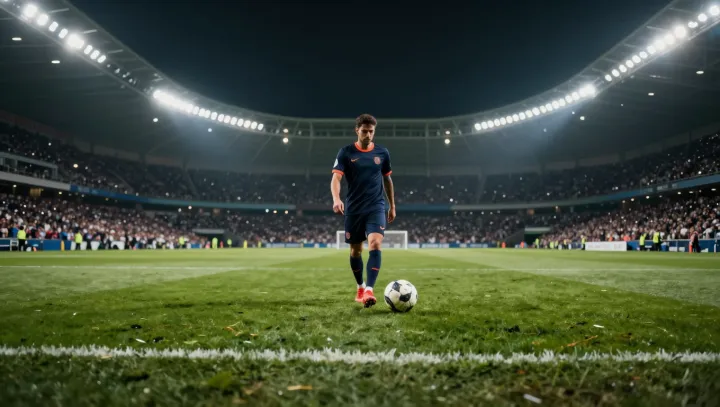
Noise barely matters to the ball. Air density, pressure, and drag change so little between an empty ground and a full stadium that the penalty’s flight remains governed by the same Newtonian equations and fluid dynamics, with variations smaller than a fraction of a degree in its path.
The real disruption lives in the brain. Human perception, not physics, turns that roar into a threat signal, engaging the amygdala and the hypothalamic–pituitary–adrenal axis like there is danger, so heart rate spikes, cortisol floods the system, and fine motor control in the corticospinal tract starts to wobble just when the kick demands millisecond precision and consistent muscle recruitment.
What looks like pressure is really a mismatch. Mechanical systems on the field stay stable, almost indifferent to the crowd, while the nervous system inside the kicker amplifies social stakes into something that mimics survival stress, so the loudest force in the arena is the one that never touches the ball at all.