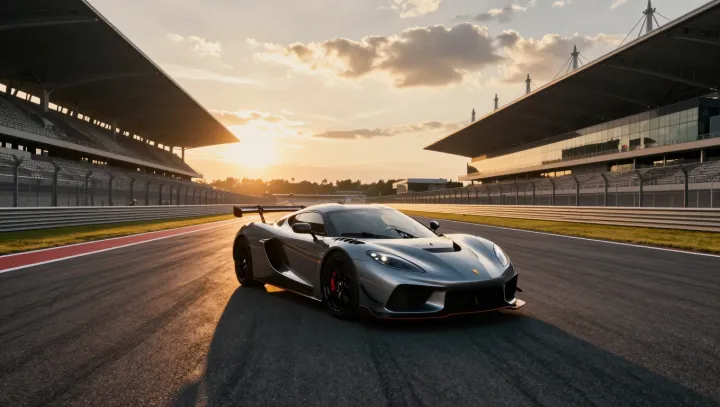
More honest as a mirror than as a machine, a muscle car turns light into spectacle far more efficiently than it turns fuel into motion. Its engine, bound by the limits of internal combustion and the Carnot efficiency ceiling, converts only a small fraction of gasoline’s chemical energy into kinetic energy at the wheels.
Most of that stored energy dies as heat, acoustic vibration, and turbulent air, the familiar waste streams of thermodynamics. Yet the painted steel shell does something quietly elegant. Sunlight arrives as a broad spectrum of electromagnetic radiation; pigments and clear coat decide which wavelengths to absorb and which to scatter, setting the car’s effective albedo. A glossy panel can redirect a significant share of the incident photons into your eyes, with almost no additional energy cost once the surface exists.
So the hulking body, often mocked as inefficient mass, becomes an optical device that is surprisingly effective. Fuel burns, friction fights, drag wins. But the sunset only needs a surface and an angle, and that big car obliges, throwing more of the sky back at you than its roaring engine ever manages to turn into clean forward motion.