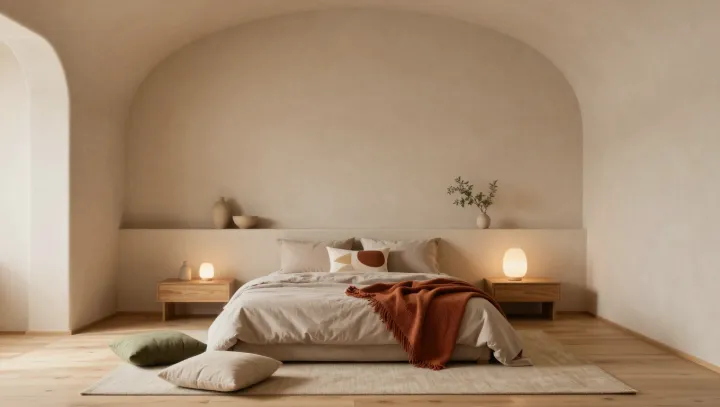
Soft light on matte walls does more for sleep than any slow video on a phone. That is the blunt claim many sleep researchers now make, backed less by lifestyle philosophy than by neurobiology and optics.
The real problem, they argue, is not only blue light. It is arousal. Bright, high contrast screens keep the locus coeruleus and sympathetic nervous system firing, while endless novelty on social feeds drives dopaminergic prediction error, so the brain keeps scanning for the next hit. A bedside lamp with a warm spectrum reduces melanopsin activation in retinal ganglion cells, easing suppression of melatonin and lowering cortical excitability, which gives the body a stable descent route toward non rapid eye movement sleep.
Wall color matters for the same reason. Stark white or saturated red surfaces bounce more light and visual noise back into the visual cortex. Muted, low saturation tones cut sensory load and reduce micro stimulation every time the eye wanders. Instead of asking the brain to downshift while a device keeps issuing tiny alerts to its reward circuits, repainting and changing a bulb strip stimuli at the hardware level, creating an environment that does not need willpower to feel sleepy.