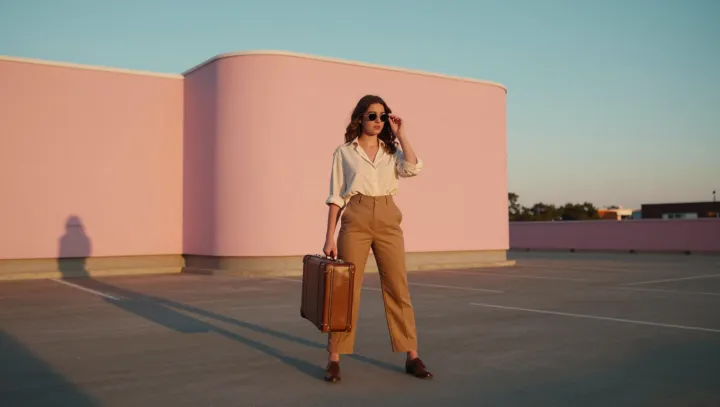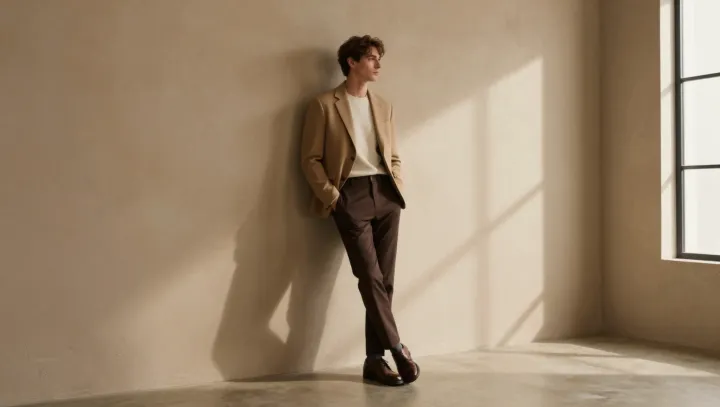
A flat, uninterrupted column of color does more for height than any stacked layers. One tone-on-tone outfit creates what vision scientists call a continuous contour, so the eye tracks a single shape from shoulder to shoe without stopping. Break that line with high contrast blocks, bulky jackets or cropped tops, and the gaze keeps hitting visual brakes that shorten the perceived frame.
The real trick is ruthless control of proportions. Strong vertical elements, like pinstripes or a long open placket, behave as guiding lines that bias size constancy and make the torso and legs read as longer segments. Wide silhouettes, oversized knitwear and heavy layering push mass outward, increasing the apparent horizontal axis and triggering a lower height-to-width ratio, which the brain codes as shorter and stockier.
Streamlined fabrics then quietly seal the effect. When cloth falls close to the body and color shifts are minimal, there is less luminance contrast and fewer edges for visual cortex to parse, so the body is processed as one tall unit. Add thick textures, puffed padding or chunky hems and you multiply edges, shadows and breaks, each one a small subtraction from your perceived height.