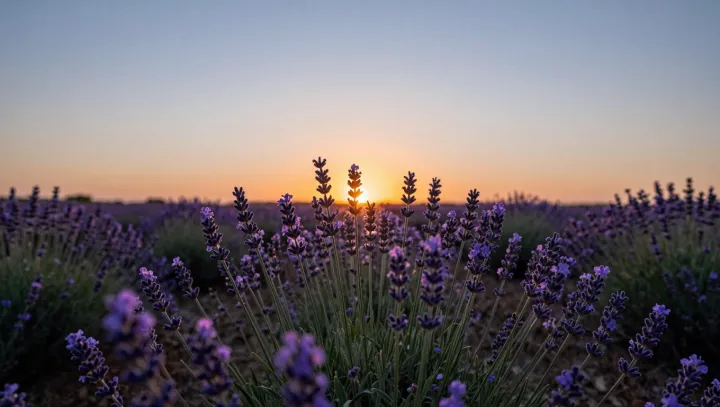
Calm is a misleading headline for a lavender field at sunset. Under that soft glow, every flower head is busy, releasing pulses of volatile organic compounds into the air, building a shifting chemical haze that insects read as clearly as road signs.
This field is less a postcard and more a contested corridor. Each spike of lavender throws out its own blend of terpenes and aromatic alcohols, a mix precise enough that honeybees, hoverflies and moths can distinguish one patch from the next, then reward the best signal with landing after landing. In parallel runs a second channel: herbivore‑induced plant volatiles, the defensive bouquet released when a caterpillar chews, which can recruit parasitic wasps while also warning neighboring stems to upregulate their own defensive enzymes and adjust nectar chemistry.
The real surprise here is how little of this is random perfume. Pollination biology and chemical ecology show that even small shifts in concentration of linalool or camphor reshape insect traffic patterns across a few meters, turning quiet rows into high‑throughput lanes of foraging and avoidance. Some flowers effectively jam competitors by saturating the air with stronger plumes, while others time their emission peaks to match their preferred pollinators’ activity cycles, creating a rolling schedule of scent that only looks like stillness from a distance.