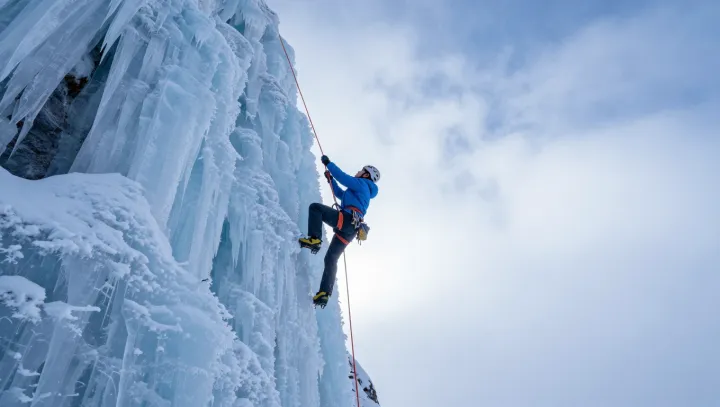
Ice, not incense, may be the cleaner switch for a scattered mind. In neuroimaging labs, scans of people under acute physical stress show something unexpected: the default mode network, the set of regions linked to mind wandering and self-talk, goes dark while task-positive circuits in the dorsal attention network flare into tight, coordinated activity.
The counterintuitive part is that this brutal focus does not arise from serenity but from a controlled threat signal. When climbers cling to a sheet of ice, forearms on fire, the amygdala and hypothalamus push the body into a sympathetic surge, yet functional MRI and electroencephalography suggest that sensory cortices, premotor areas, and the anterior cingulate cortex align around a single goal, suppressing irrelevant chatter that often persists even during seated meditation practice.
Meditation, despite its reputation, often leaves space for rumination because arousal stays low and the salience network must learn, slowly, to redirect attention without much biochemical help. By contrast, cold, gravity, and pain generate a flood of norepinephrine and dopamine that sharpen signal-to-noise ratios at synapses in the prefrontal cortex, forcing a kind of involuntary mindfulness that feels less holy and more like survival, yet looks, on the scanner, remarkably clean.