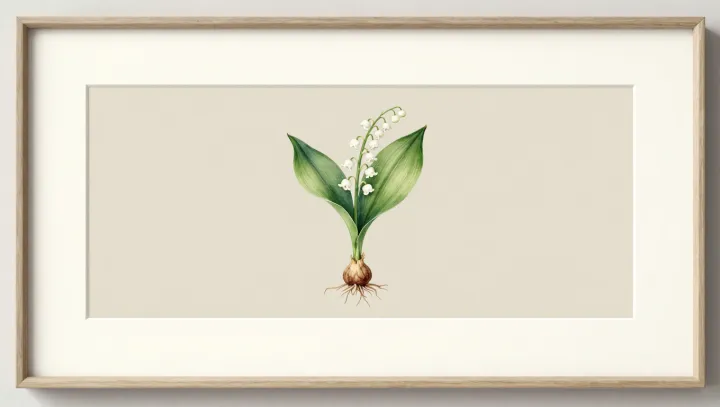
Those white bells are not innocent at all. Under the waxy sheen of lily of the valley sits a pharmacology lesson written in poison, where sweetness and danger share the same stem and every part of the plant carries risk.
The real scandal is chemical, not poetic. Packed into the sap are cardiac glycosides such as convallatoxin, cousins of digoxin, that lock onto the sodium potassium ATPase pump on heart cells and refuse to let go, forcing intracellular sodium to climb and driving calcium influx through the sodium calcium exchanger in a way that boosts contractility yet sabotages control of rhythm.
What looks like a woodland trinket behaves more like a rogue programmer inside the cardiac conduction system. By distorting ion gradients across the myocyte membrane, these molecules slow atrioventricular nodal transmission, trigger ectopic beats, and can flip a healthy heart into bradycardia, dangerous arrhythmia, or full arrest after only small ingested doses, especially in children or pets with lower body mass.
Romantic symbolism does not survive contact with toxicokinetics. The glycosides are rapidly absorbed by the gastrointestinal tract, bind to tissues, resist simple home remedies, and can produce nausea, visual changes, and then lethal electrical chaos long before the flower’s perfume fades from the air.