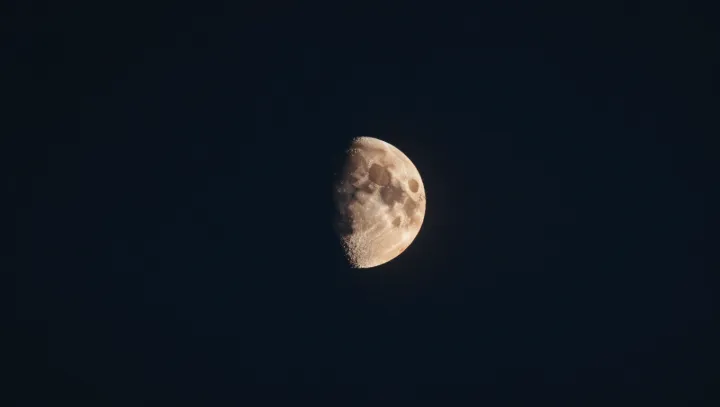
That dim ghostly disk around a sharp crescent is not a camera trick. It is a blunt reminder that Earth is, in optical terms, a floodlight. Sunlight hits oceans, clouds and ice, then bounces outward; with a relatively high Bond albedo, Earth throws a broad cone of reflected light straight at its satellite, bathing the Moon’s night side in a muted glow that still beats the background star field.
The surprising part is how little Moon we need lit directly. A narrow crescent comes from simple geometry: Sun, Moon and Earth sit at such angles that only a slim slice of lunar day faces us. Yet from the Moon, Earth at that moment looks almost full, its apparent diameter several times the Sun’s, its integrated brightness tens of times higher than the full Moon we see here. That oversized reflector turns the lunar dark side into a faint, fully drawn circle, while distant stars, though individually luminous, are so far and spread out that their combined flux on the lunar surface is negligible compared with this single nearby mirror of sunlight.