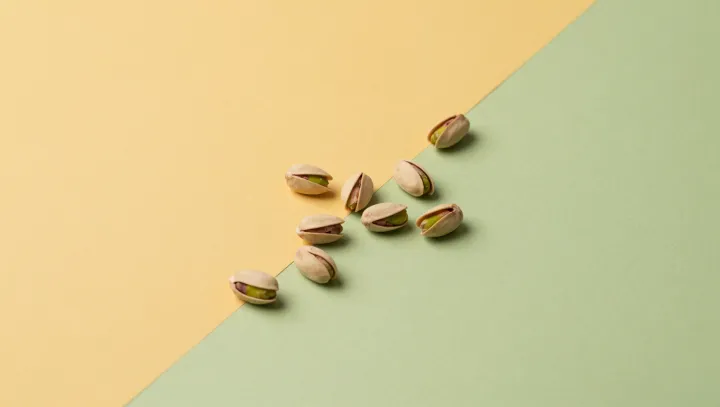
A glossy bag is marketing; a split pistachio shell is evidence. That narrow opening appears simple, yet it is a physical record of how the nut ripened, dried, and aged in real air, not in a simulated atmosphere.
Freshness shows first in color, not in copywriting. The exposed kernel holds chlorophyll and carotenoids that degrade through photo-oxidation and lipid peroxidation, so a vivid green surface means limited oxidation of the nut’s oils and pigments. When that green turns dull or brown, it signals breakdown of unsaturated fatty acids and loss of volatile aroma compounds that even a nitrogen-flushed bag cannot fully reverse.
Texture speaks louder than branding. A clean, natural split indicates the kernel expanded and forced the shell apart as moisture content dropped in a controlled way, tracking both maturity and internal pressure. Hairline cracks, chalky interiors, or rubbery bite show water activity drifting away from the narrow range that preserves crisp cell walls and limits microbial growth. Packaging can hide that reality; the shell cannot.
Scent finishes the verdict. Once opened, an intact, bright kernel releases aldehydes and pyrazines associated with fresh roasting, while rancid notes of hexanal betray oxidized lipids regardless of what the label claims. The pistachio’s own window is not pretty design; it is a built-in quality assay, running in real time in your hand.