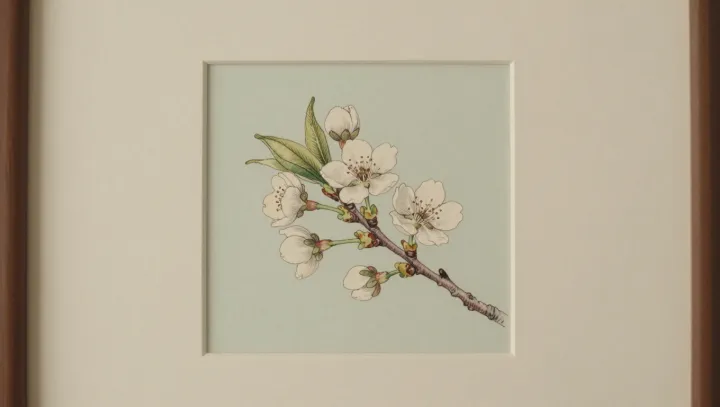
A single stem is not democratic at all; it quietly plays favorites. One bud opens wide, another stays clenched, because the green column between them is wired for discrimination, not equality, using separate vascular routes and shifting chemical priorities along its length.
This bias starts with plumbing. Xylem pushes water and mineral ions upward in a bulk stream, yet phloem can redirect sucrose and amino acids toward one sink organ while starving another, through pressure-flow gradients and localized changes in sink strength. Short distances on the stem host steep differences in hydraulic resistance and sieve tube loading, so a near-identical pair of buds can receive very different cargo manifests from the same pipeline.
Timing, though, is written in hormones. Slightly higher levels of auxin and gibberellin near the younger bud keep cell division and meristem identity genes active, while ethylene and abscisic acid accumulate near the older bloom, nudging petals toward expansion and senescence programs. Differential expression of transcription factors in each receptacle, triggered by those hormone gradients, locks in two developmental clocks. One organ behaves as a strong metabolic sink, the other as a maturing display, yet both still ride the same column of living tissue, separated less by distance than by instruction.