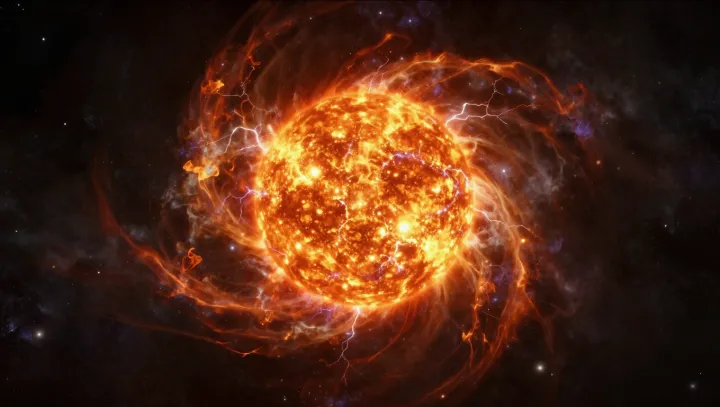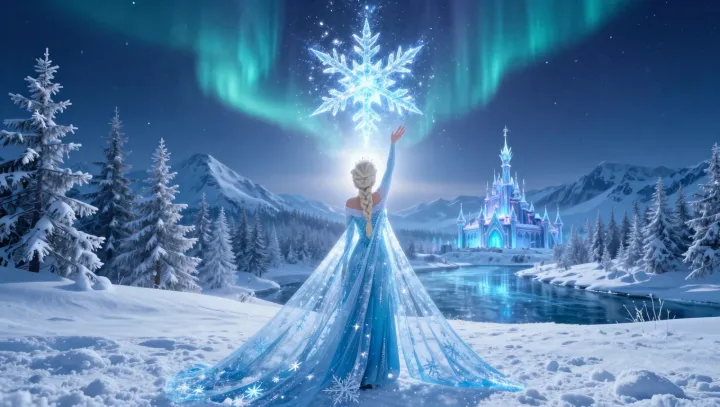
Green curtains in the sky already hint that Elsa needs less magic than good plasma physics. That glow is not fantasy. Charged particles from the solar wind crash into oxygen and nitrogen, excite electrons, then release photons as they relax, a process mapped by magnetohydrodynamics and ionospheric chemistry.
The harsher claim is this: the same machinery that paints auroras can also lock in cold. Energy dumped into the upper atmosphere alters circulation, nudging the polar vortex and reshaping Rossby waves, so mid‑latitude regions can sit under blocked high‑pressure domes and stubborn Arctic air for weeks. No spell. Just redistributed kinetic energy and disrupted radiative balance that keep heat from mixing the way it usually does.
Snowflakes push the idea further. Their ornate order is not whimsy. Supersaturation, nucleation on tiny aerosols, and diffusion‑limited aggregation let water molecules snap into hexagonal ice, branching outward like a self‑writing code. Scale up the ingredients — persistent moisture, uplift, and freezing temperatures maintained by altered jet‑stream dynamics — and snowfall can become a feedback loop, brightening surface albedo so incoming solar radiation gets bounced away, reinforcing the chill until the scene starts to look uncomfortably like a children’s film made real.