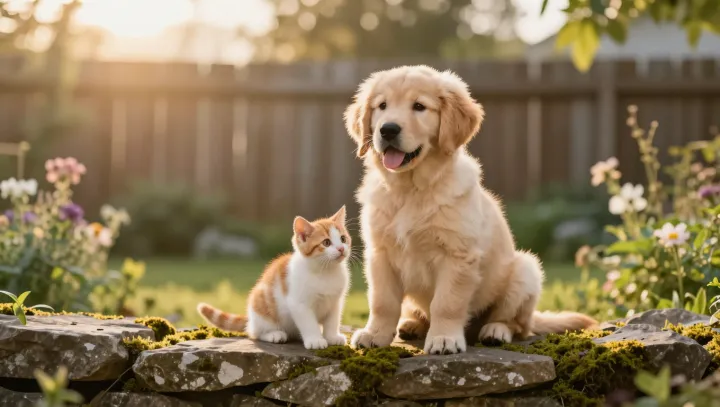
Predator and prey do not meet as equals in the wild. Yet on living room carpets, a kitten will nap against the very muzzle that could have ended it. Soft fur hides hard biology: selective breeding has already dampened predatory drive in dogs, and domestic cats show reduced fear responses compared with their wild cousins, shifting the baseline before any cross-species friendship even starts.
More decisive is timing. Early-life sensitive periods, described in ethology as windows for filial imprinting and socialization, stay open long enough in both species for a simple rule to take hold: whatever brings food, warmth and safety is tagged as in-group. Co-feeding, shared bedding and synchronized routines then recruit the hypothalamic–pituitary–adrenal axis, lowering cortisol spikes when the animals are together rather than apart, welding comfort to each other’s presence.
The bond is not sentimental; it is chemical and learned. Repeated gentle contact and play raise oxytocin levels in both animals, and over time blunt predatory motor patterns into ritualized chasing that stops short of harm. Each becomes part tutor, part moving safety cue. Under human management, the food chain is not erased but rerouted, and at the end of that detour lies a couch, two species, one shared definition of family.