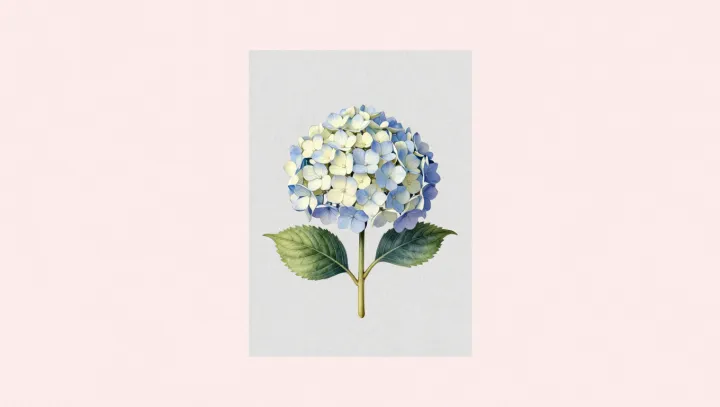
Color, not toughness, was the original brief for the modern bigleaf hydrangea. Breeders selected for saturated blues and pinks, stacking genes for dense inflorescences and high anthocyanin content, expecting gardens to be static galleries, not experimental plots. The plant refused that script. Its mophead blooms turned out to be exquisitely sensitive sensors, translating invisible ionic shifts beneath the mulch into visible gradients of blue and white.
This flower is now less an ornament than a quiet field instrument. Slight changes in soil pH alter aluminum solubility; when pH drops, Al3+ ions move freely, bind to anthocyanin complexes in sepal cells, and push pigments toward intense blue, while higher pH locks aluminum away and washes petals toward pallid whites or soft pinks. What looks like a watercolor fade is actually acid–base chemistry and metal chelation playing out in real time, petal by petal, bloom by bloom.
The striking part is not the color trick but the resilience hidden behind it. To juggle these swings, hydrangea tissues rely on vacuolar pH regulation, membrane transporters and ion sequestration that prevent aluminum toxicity while still allowing color-shifting complexes to form. Gardeners see a decorative gradient. Plant biologists see a living assay of stress physiology, a test case for how crops might modulate pigment pathways and ion homeostasis to survive soils that will not stay the same.